
Posting more on LinkedIn doesn't automatically mean more reach. An analysis of 89,000 LinkedIn URLs found the platform is heavily referenced across AI tools.
This is a sign of how much weight LinkedIn content carries today. But before any of that matters, your post has to actually reach people first.
These six tools approach that problem differently, some through targeted engagement, others through content creation or outreach.
6 Engagement LinkedIn Tools
1. Podawaa
Podawaa boosts a post by configuring exactly who engages with it, how much, and how it's paced, rather than sending it to a random network.
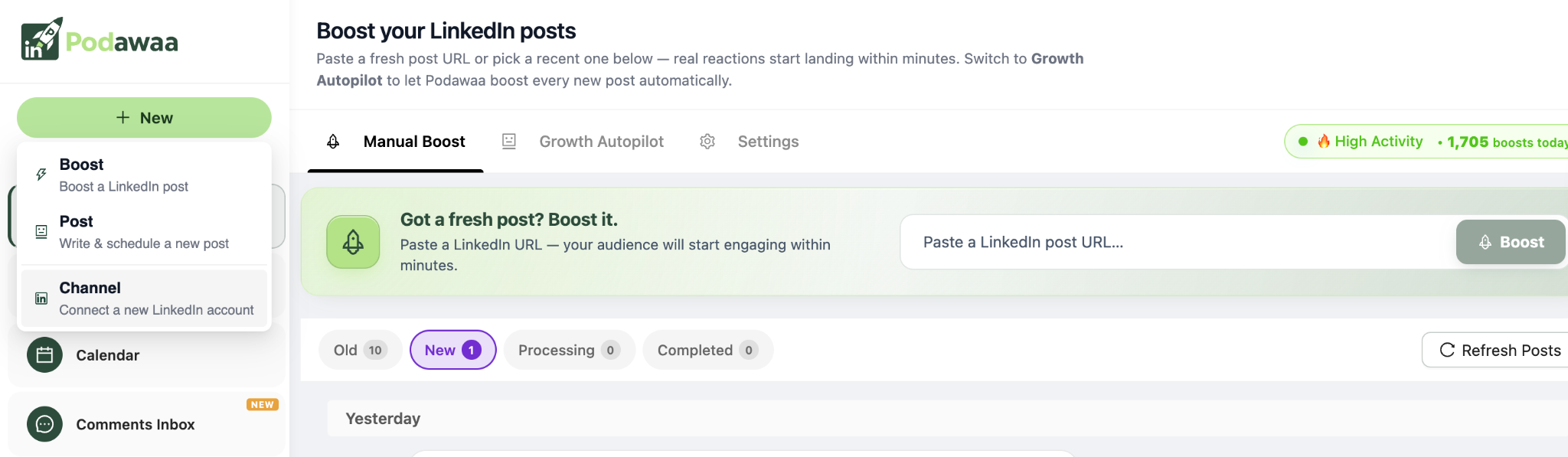
You paste your post URL into the boost dashboard and the configuration starts. Engagement isn't random, you choose targeting by language and industry.
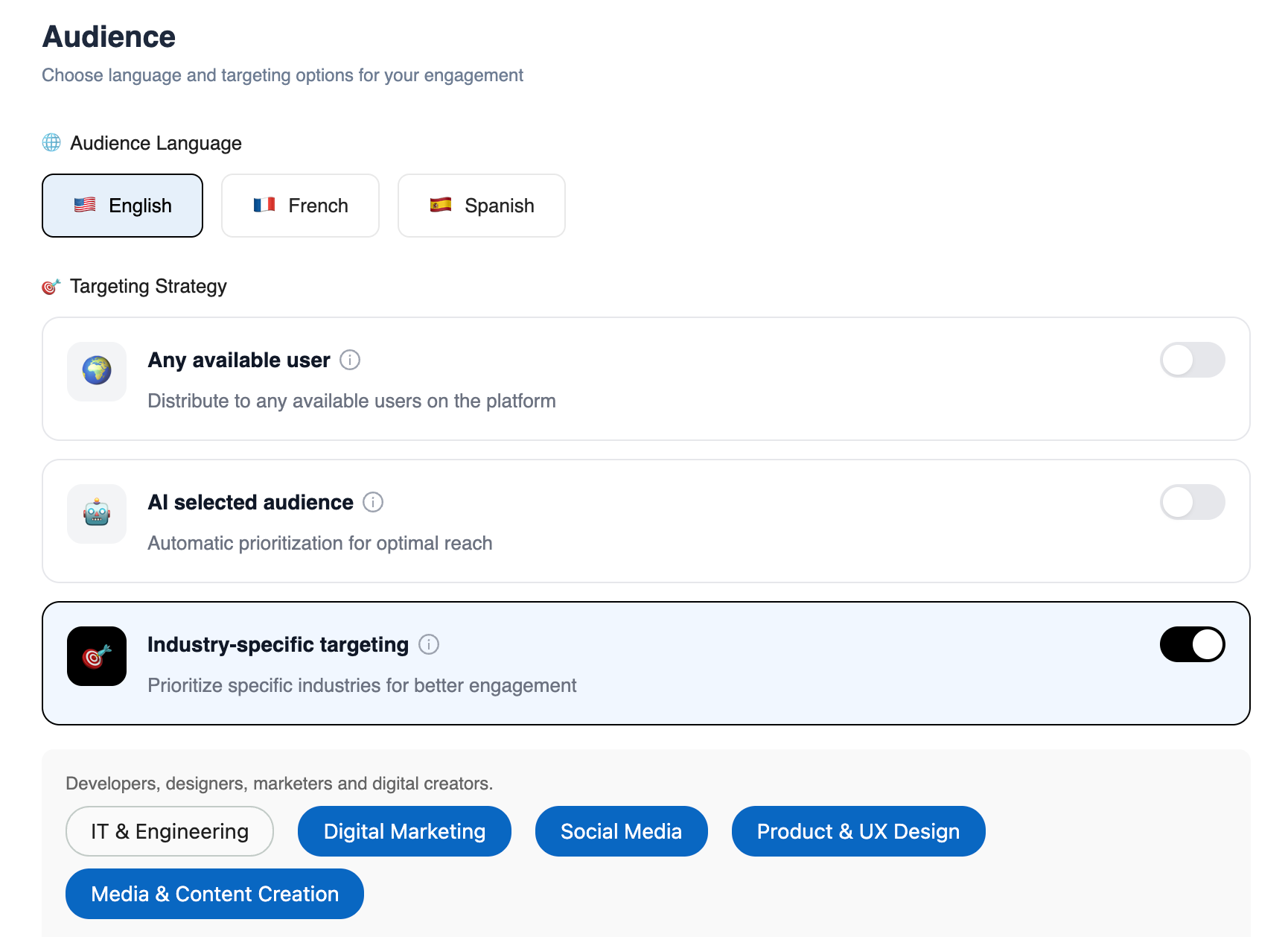
Three targeting modes are available: any available user, AI-selected audience, or industry-specific targeting, narrowing reach to fields like IT, digital marketing, or product design.
Next, you set how much engagement the post gets, with a clear risk label on each tier.
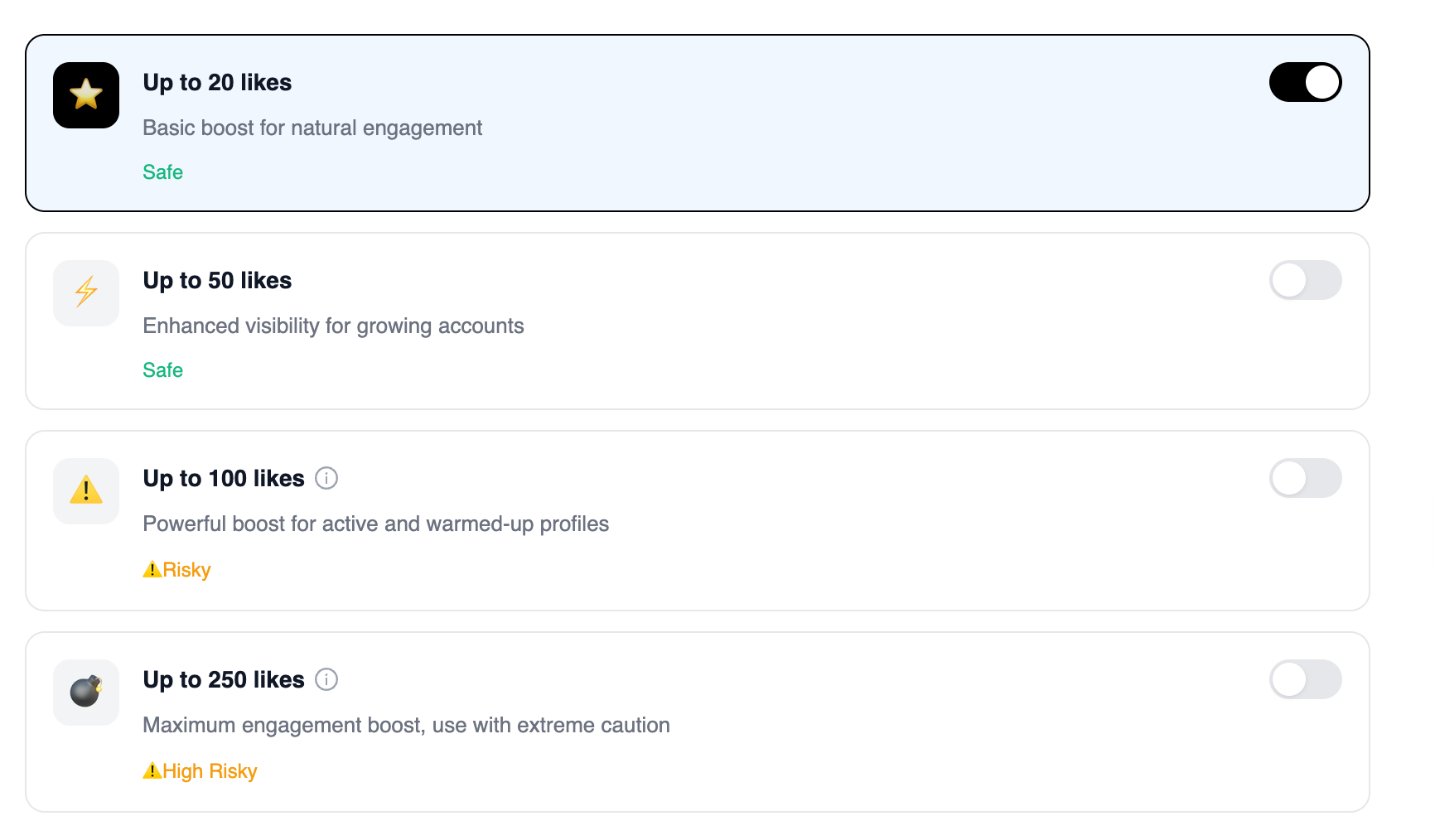
Up to 20 or 50 likes are marked "Safe." Higher volumes (100–250) are flagged "Risky" or "High Risk" — a level of transparency most engagement tools don't offer.
Comments are AI-generated based on the post content, but nothing goes live without review. Each comment can be revealed, edited, approved, or rejected individually before it's added to your post.
The last configurable layer is pacing, how engagement is spread out over time.
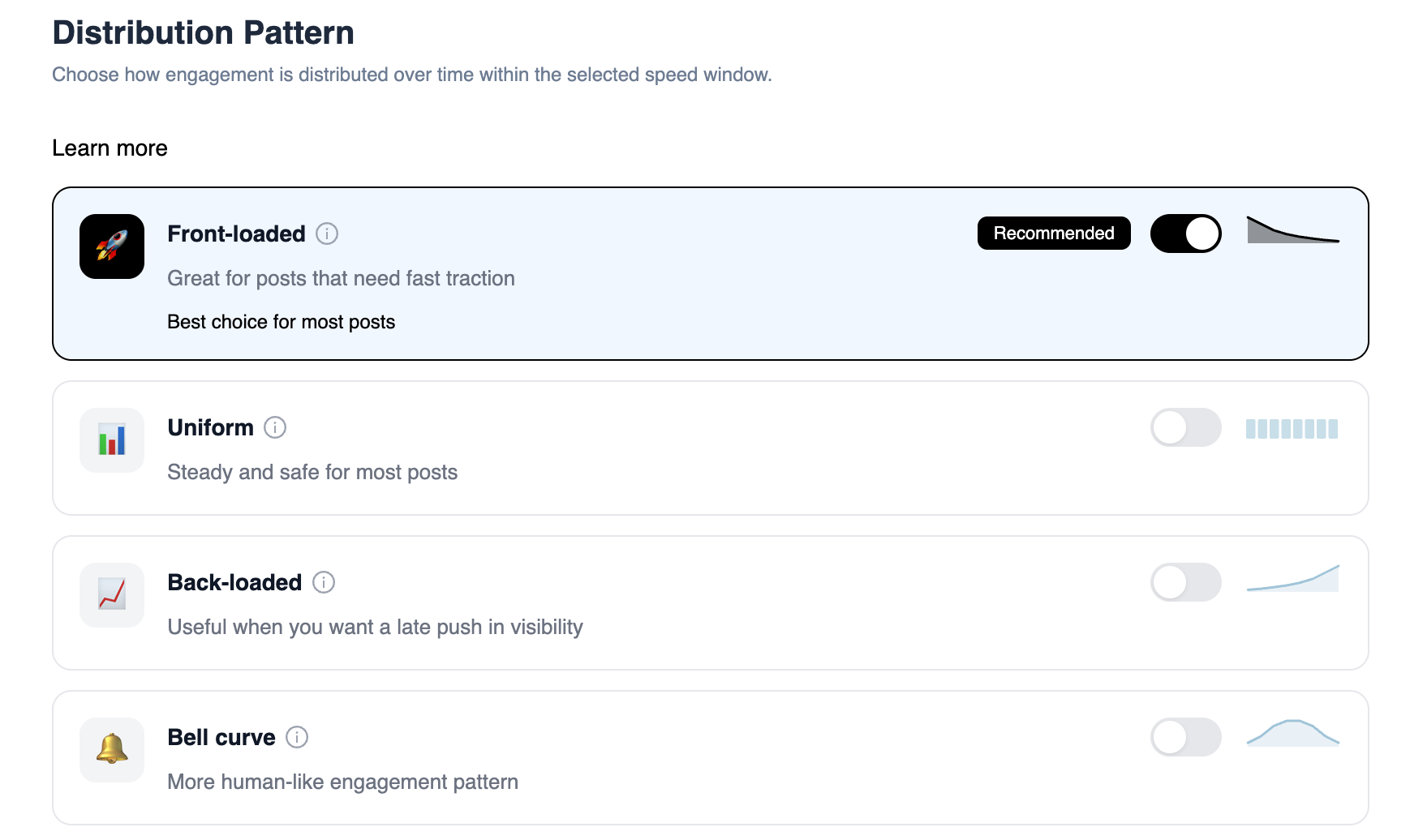
Options range from front-loaded (fast traction) to bell curve (a more human-like pattern) to back-loaded (a late push). This affects how natural the engagement looks to LinkedIn's algorithm.
Before confirming, you get a full summary of every setting.
What Podawaa gives you:
- Industry and language-based audience targeting
- Configurable reaction volume with safety labels
- AI-generated comments with manual review and editing before approval
- Multiple distribution pacing patterns
- Growth Autopilot to apply this configuration automatically to every new post
Who it is for: creators and marketers who want engagement that's actually relevant to their niche, with visibility into what they're configuring.
Pros: granular control over targeting, volume, and pacing; transparent risk labels; AI comments are editable, not auto-published blind.
Cons: best results take a few boosts to calibrate. First-time users may want to start with the recommended settings before customizing further
Pricing: free plan available. Paid plans from €29/month with a 7-day free trial.
2. LinkBoost
LinkBoost automates engagement from a network of matched profiles. You choose a post to promote and LinkBoost handles the rest, so no manual configuration needed.
What LinkBoost gives you:
- Automated post engagement from a matched account network
- No pod setup or management required
- Quick reach boosts with minimal configuration
Who it is for: solopreneurs and small teams who want fast reach boosts without configuring anything.
Pros: no management required, fast results, simple to use.
Cons: limited audience targeting, no content creation or analytics.
Pricing: contact for pricing.
3. Taplio
Taplio is built for creators who struggle with consistency. Give it a topic and it generates post drafts in multiple formats — tips, personal stories, listicles, or LinkedIn carousels.
The carousel builder converts a blog post into a structured visual post without manual formatting. A built-in scheduler and analytics layer round out the workflow, and the AI can also help with post hooks when you're stuck on an opening line.
What Taplio gives you:
- AI-generated post drafts across multiple formats and tones
- Carousel builder for converting long-form content into visual posts
- Built-in scheduler with content calendar view
- Analytics tracking reach, engagement, and follower growth
Who it is for: creators and founders who need help generating ideas and writing faster.
Pros: fast content ideation and drafting, strong carousel builder.
Cons: AI drafts need editing to sound personal, no post boosting or audience targeting, more expensive than most tools on this list.
Pricing: from $39/month for scheduling and analytics, $65/month for full AI features. The Taplio alternatives guide covers lower-priced options worth considering.
4. Expandi
Expandi is built for personalized LinkedIn outreach at scale. You build campaigns segmented by job title, industry, or location, personalize each message with dynamic placeholders, and let Expandi handle the sending within LinkedIn's safe daily limits.
What Expandi gives you:
- Automated, personalized connection requests and message sequences
- Audience segmentation by job title, industry, or location
- Smart inbox to manage all replies in one place
- Built-in safety limits to reduce account risk
Who it is for: sales teams and founders who need to generate leads at scale.
Pros: moves from prospecting to pipeline without manual effort.
Cons: outreach only, no content tools or post boosting, no free plan.
Pricing: from $99/month per account.
5. Linked Helper
Linked Helper automates bulk connection requests, message sequences, and follow-ups, with Sales Navigator integration for advanced filtering.
What Linked Helper gives you:
- Bulk connection requests and automated message sequences
- Sales Navigator integration with advanced filters
- Basic CRM for managing leads
Who it is for: sales and marketing teams scaling outreach.
Pros: strong prospecting automation, affordable pricing.
Cons: no post engagement or content features.
Pricing: from around $15/month.
6. Zopto
Zopto uses Sales Navigator to target relevant profiles, then sends automated connection requests and personalized messages at scale, with visitor tracking and multi-account management.
What Zopto gives you:
- Sales Navigator integration for precise targeting
- Automated, personalized message sequences at scale
- Multi-account management for sales teams
Who it is for: sales teams running high-volume campaigns.
Pros: strong Sales Navigator integration, built for team scale.
Cons: no post engagement features, no free plan.
Pricing: you need to contact for pricing.
Which Tool Is Right for You?
If your goal is growing your following through better-targeted reach, Podawaa is the most direct fit. If content creation is the bottleneck, Taplio helps you write faster.
For outreach and lead generation, Expandi, Linked Helper, and Zopto each approach it differently.
Frequently Asked Questions
Why is my LinkedIn reach low even when I post consistently?
Consistent posting helps, but reach also depends on who engages with your content early and how relevant that engagement is. Random engagement signals less to the algorithm than engagement from people in your niche.
How do I know if my LinkedIn strategy is working?
Track impressions, engagement rate, and follower growth over time. Flat numbers despite consistent posting usually point to a reach problem, not a content problem.
Is it risky to boost engagement on LinkedIn?
It depends on volume and pacing. Tools that label engagement tiers by risk level — rather than pushing maximum volume by default — give you more control over how natural the activity looks.
What LinkedIn metrics should I track?
Focus on impressions, engagement rate, follower growth, and which post formats perform best. The LinkedIn metrics guide breaks down what each number means.