Updated October 10, 2026: added answers to the questions Podawaa users ask most about targeting and language.
You post on LinkedIn, it gets a few hundred impressions and a dozen likes, and the numbers look fine. But none of the people engaging are the ones you actually want reading your content: potential clients, employers, or partners.
That's because reach and the right reach are two different problems.
Most LinkedIn advice only deals with the first one, get more views, more likes, more comments, by posting at the right time or using engagement pods.
None of that tells your content who to reach. You can grow your numbers and still be invisible to the people who matter to your goals.
This article focuses on how to get seen by the right audience, not just a bigger one.
How I Researched This
I tested Podawaa's audience targeting and boosting features myself over several months to see what actually works.
I also went through Reddit threads where people kept describing the same frustration, posting consistently, doing everything right, and still getting reach from the wrong people or no reach at all.
I watched breakdowns from a few LinkedIn creators with audiences over 100K, since their advice carries more weight; you don't get to that size without understanding the algorithm firsthand. A handful of them had tested this with real client data in 2026, not just theory, which is exactly the kind of evidence this topic needs.
Why More Impressions Doesn't Mean the Right Reach
A post can get thousands of impressions and still produce nothing, while a post with 20 likes converts into real client meetings.
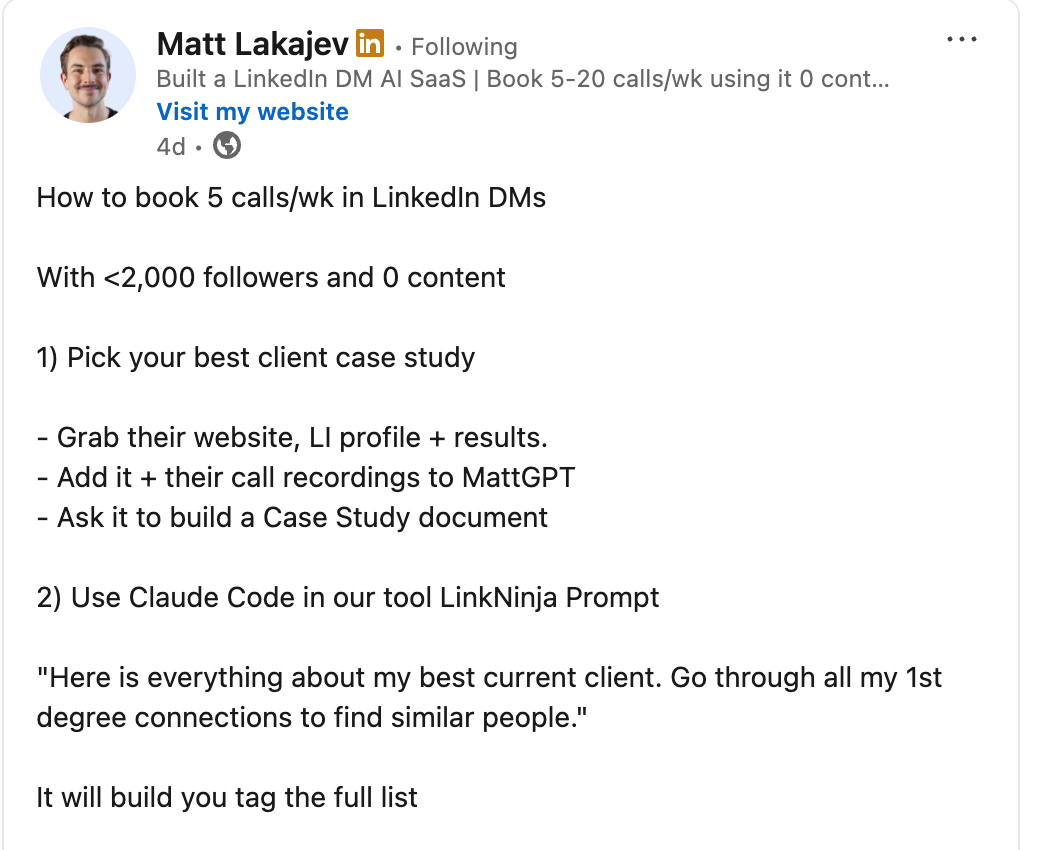
Creator Matt Lakajev coaches founders on LinkedIn growth, and he's been pretty direct about this gap in his own research. He found something close to a 22 times difference in outcomes between accounts that look identical on paper.
One example he points to is a founder with around 2,100 followers and an average of 20 likes per post who books over 40 client meetings a month, compared to accounts with ten times the following converting almost nothing. As he put it, "likes are engagement. Engagement is not clients. There is a gap between those two things."
I saw the same pattern described from a different angle on Reddit. Several people analyzing the 2026 algorithm changes pointed out that "a comment saying 'Great post!' or 'Thanks for sharing' now counts for almost nothing" in how LinkedIn actually weighs engagement. The volume of reactions isn't the signal it used to be. Relevance is.
How LinkedIn Decides Who Sees Your Posts
LinkedIn looks at three things before deciding how far to distribute a post: who your existing audience already is, how clearly defined your content's subject matter is, and how relevant the people engaging with it early on are to that subject.
This is exactly why content written for "everyone" tends to go nowhere. A vague post gives LinkedIn nothing specific to match against an audience, so it defaults to broad, low-relevance distribution.
One Redditor summed up the shift well: "LinkedIn has moved to an interest-based graph, which means that people who are interested in the content that your client posts, LinkedIn distributes their content only to those people."
Matt describes the same mechanism with his own framing, calling it "tribal density," the idea that content tied to a specific, recognizable group outperforms generic advice because the right readers recognize themselves in it instantly. Different language, same underlying point: specificity is what actually drives distribution, not just tone or polish.
[Image: Daniel Foley Carter's LinkedIn post on what the algorithm actually rewards]
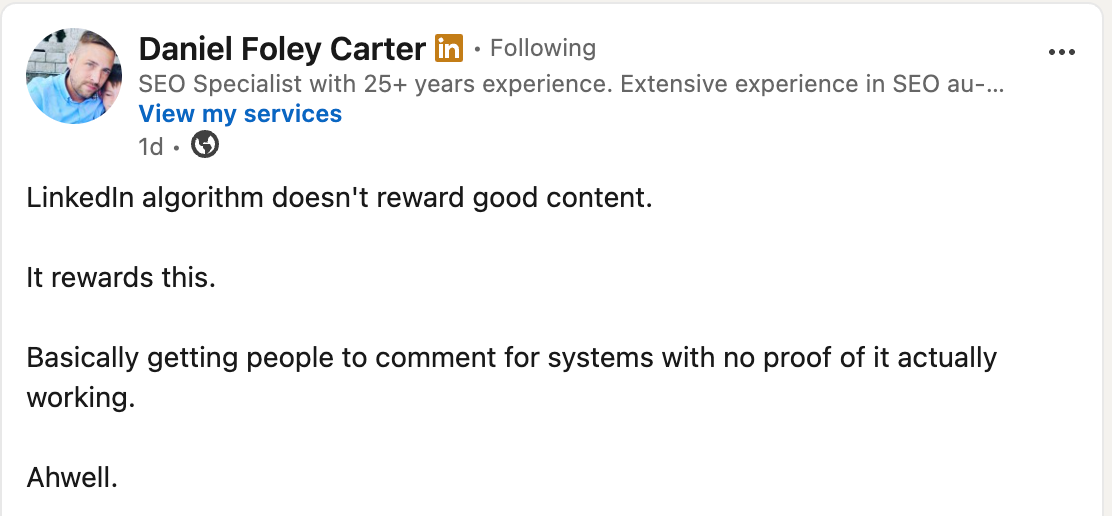
Not everyone agrees this is a good thing. SEO specialist Daniel Foley Carter put it bluntly in a recent post, arguing the algorithm rewards getting people to comment more than it rewards genuinely good content.
It's a fair criticism, and it's also exactly the trap broad, generic posting falls into when people chase comments instead of relevance.
6 Steps to Reach the Right Audience on LinkedIn
1. Define exactly who the post is for. Name the audience inside the post itself, ideally in the first line. "Lessons I learned this week" reaches no one specifically. "Three lessons SaaS founders can learn from launching a new product" tells both the reader and the algorithm exactly who it's for.
2. Get genuinely relevant engagement in the first hour. This window is still when LinkedIn collects the data that determines wider distribution. What's changed is that who engages now matters more than how many do. For more on why this window matters specifically, see the first hour on LinkedIn.
3. Avoid tools that require LinkedIn account access. This is a sometimes a risk. I came across multiple Reddit threads where people flagged engagement pods specifically, with one warning that pods using a Chrome extension will get you shadowbanned now.
The risk is tied to that kind of access, not to getting engagement in general. For the full information, see are LinkedIn pods safe and can LinkedIn detect engagement pods.
Podawaa solves this safely. You choose your engagement circle manually, or let it match you automatically with relevant professionals in your niche, without ever needing access to your LinkedIn account. Sign up for free!
4. Publish consistently enough to generate data. One post a month gives LinkedIn almost nothing to learn from. Three posts a week gives the algorithm enough signal to understand your topic and your actual audience.
5. Vary content format. Text posts work for opinions and personal stories. Carousels work for frameworks and data. If you only post one format, you're invisible to everyone who responds better to the others.
6. Study who actually engages, then adjust. After publishing, check the job titles, industries, and seniority levels of who engaged. If a post about B2B sales draws engagement mostly from founders and VPs, that's a direct signal for what to write next.
How Podawaa Helps You Reach the Right Audience
The risk described in step three is exactly why an off-platform delivery model matters here, and it's the core reason I kept coming back to Podawaa while researching this.
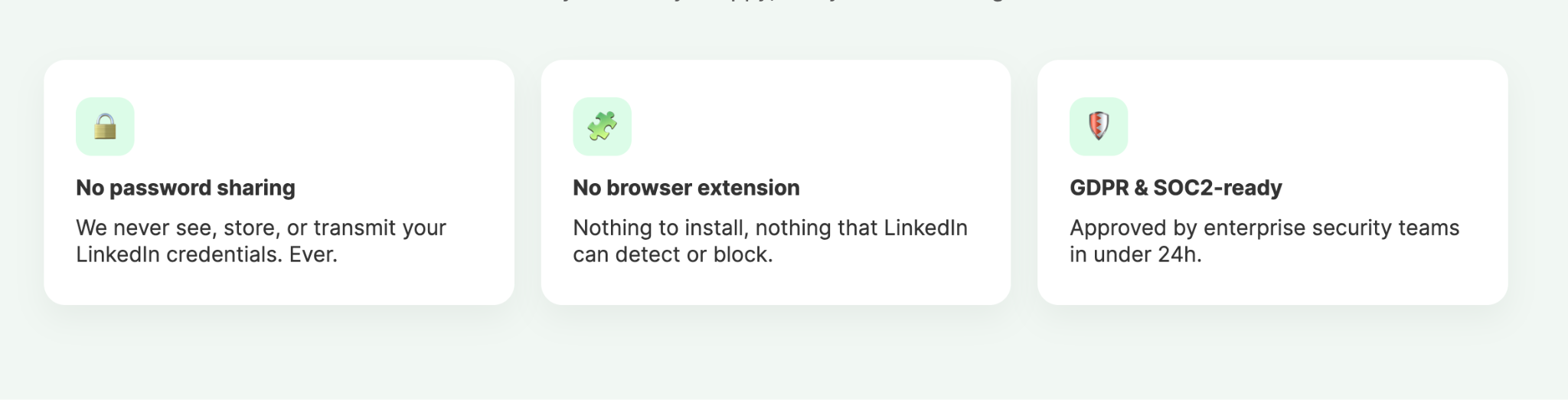
Podawaa doesn't ask for your LinkedIn credentials and doesn't install a browser extension, so there's nothing for LinkedIn to detect in the way Reddit users describe triggering shadowbans.
Instead, engagement comes from a community of more than 10,000 active users, and it's matched to your post by industry, role, or niche rather than delivered randomly. That's the same specificity principle from steps one and two, just automated instead of manual.
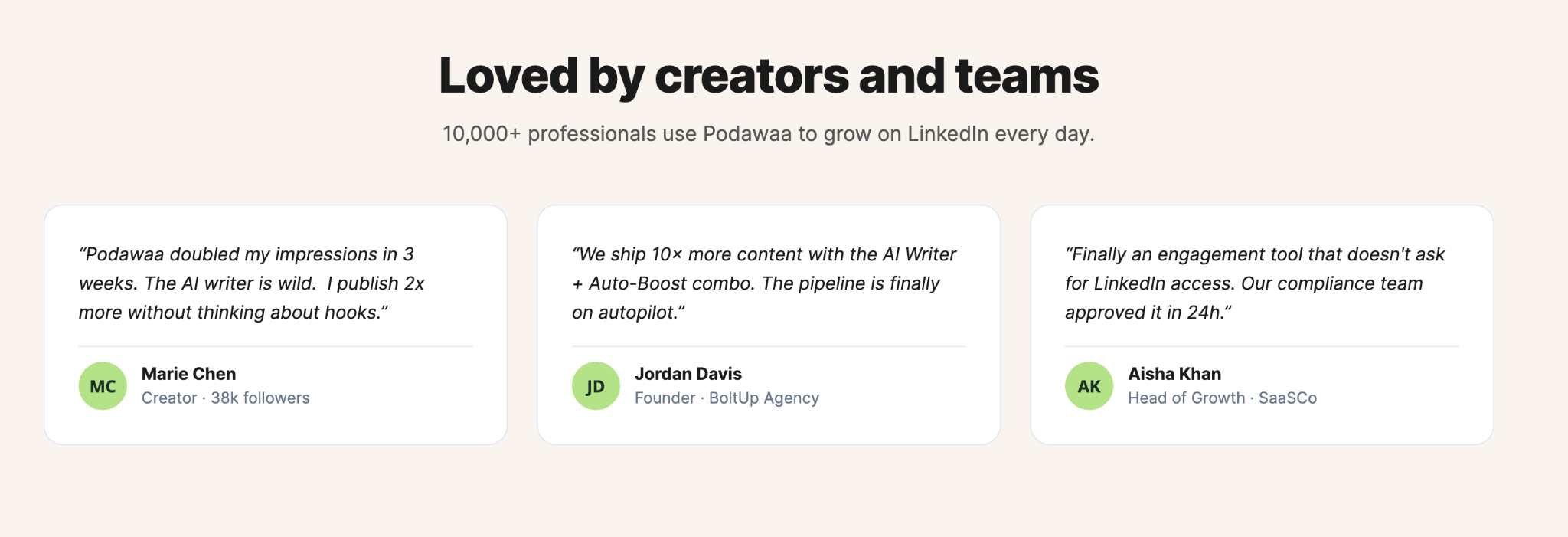
Across more than 2 million posts optimized on the platform, the reported average engagement lift is 450%. Marie Chen, a creator with 38,000 followers, described it directly: "Podawaa doubled my impressions in 3 weeks."
Aisha Khan, Head of Growth at SaaSCo, said their security team approved the tool within 24 hours. That speed matters because it's not a marketing claim — it's the kind of thing a security team actually has to sign off on.
For a closer look at what reach and follower growth actually looks like once this is in place, see the LinkedIn impressions case study and follower growth case study.
Frequently Asked Questions
Why is my LinkedIn content reaching the wrong audience?
Usually because the post doesn't signal clearly enough who it's for, or because the early engagement it receives comes from people unrelated to the topic. LinkedIn reads both signals when deciding how widely to distribute a post.
Does early engagement affect LinkedIn reach?
Yes. The first hour after publishing is when LinkedIn gathers the most data to decide on wider distribution. Relevant engagement from the right audience produces stronger distribution than a larger volume of generic engagement.
Are LinkedIn engagement pods risky in 2026?
Pods that require a Chrome extension or direct LinkedIn account access carry a real shadowban risk, based on multiple firsthand accounts shared on Reddit. Tools that don't require that kind of access sit outside that specific risk.
Does posting more often help you reach more people?
Only if the content stays specific and relevant. Increased frequency without relevance just produces more low-engagement posts, not more reach.
How can AI help me reach the right audience on LinkedIn?
AI tools can match your content to relevant audiences by industry or role, help you write posts with clearer audience signals, and recommend posting times based on when your specific audience is active.
FAQ: questions from Podawaa users
Can I choose the country of the people who engage?
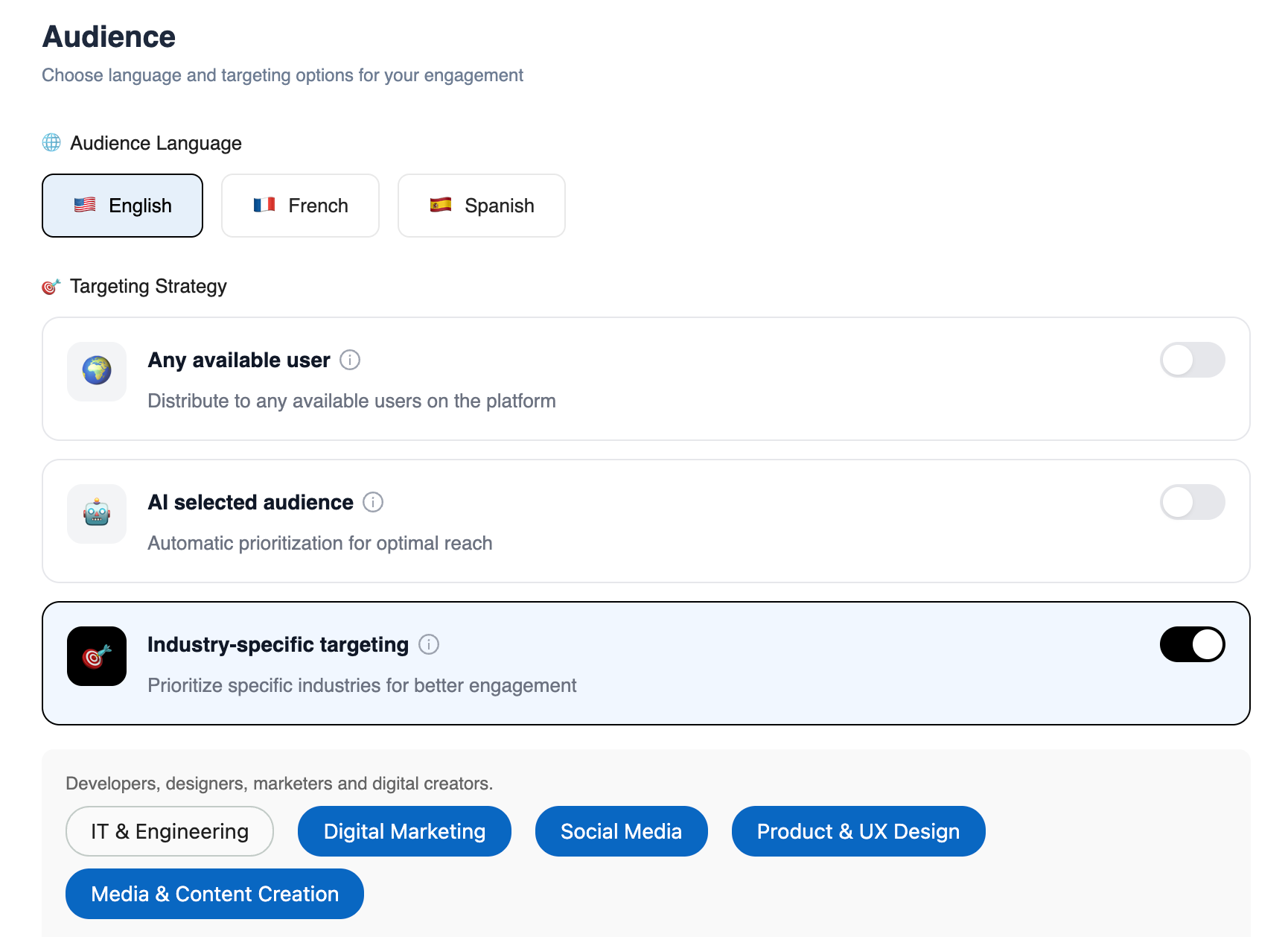
No, there's no targeting by country. You choose the engagement language and, on plans with custom targeting, the industry.
Why do I see engagers from other countries?
Engagers are selected by language and topic, not by country, so an English-language boost can include members from any country who use LinkedIn in English.
Which languages are available?
English, French and Spanish. Comments are written in the language you choose; any other language falls back to English.
Can I target a specific industry?
Yes, on Community Accelerate, Community Dominate and every Private plan. The AI audience option picks profiles relevant to the post itself.