Story posts earn more comments and shares than almost any other format on LinkedIn. People connect with experiences in a way they simply do not connect with advice, tips, or lists.
But knowing that is not the same as knowing how to write one.
Most story posts fail for the same reason: the writer skips straight to the lesson and buries the tension. The moment, the doubt, the shift, those are the parts that make a story worth reading.
Skip them and you have a diary entry. If you want to understand what separates a post that gets read from one that gets scrolled past, our guide on how to write a viral LinkedIn post covers the mechanics in detail.
This guide walks through 17 LinkedIn storytelling templates, the structure behind each one, and real creator examples showing what each format looks like when done well.
How We Built This List
We reviewed LinkedIn creators with audiences ranging from around 5,000 to over 100,000 followers across marketing, SaaS, startups, and personal branding.
We looked for posts that generated strong engagement through storytelling, not because they went viral once, but because they used structures that anyone can adapt.
We also matched every example to a Podawaa storytelling template so you can turn the structure into your own post instead of copying someone else's content.
The video above walks through the full planning workflow inside Podawaa in real time.
What Makes a Good LinkedIn Story Post
Most story posts fail because they open with the lesson instead of the moment. The writer has already processed what happened and wants to share the conclusion, which removes all the tension before the reader has a reason to care.
Every post on this list does the opposite. Here is the structure they all follow:
- Opens with a specific moment, not a general observation
- Creates enough tension in the first line to earn the second
- Shows the challenge or doubt before revealing the resolution
- Lands on one clear takeaway the reader can apply or relate to
- Ends with a question or reflection that invites a reply
The examples below cover five story structures: hesitation stories, failure stories, transformation stories, realization stories, and contrarian stories. A strong monthly content plan includes at least two or three different structures so your storytelling does not start to feel formulaic.
If you want to see how these patterns play out across real posts with engagement data, our analysis of 200 high-performing LinkedIn posts breaks down exactly what separated the posts that got 3,000 likes from the ones that got 40.
1. I Almost Didn't Try It — But I'm So Glad I Did
The opening line leads with the result, then rewinds. Most LinkedIn posts make you wait for the payoff.
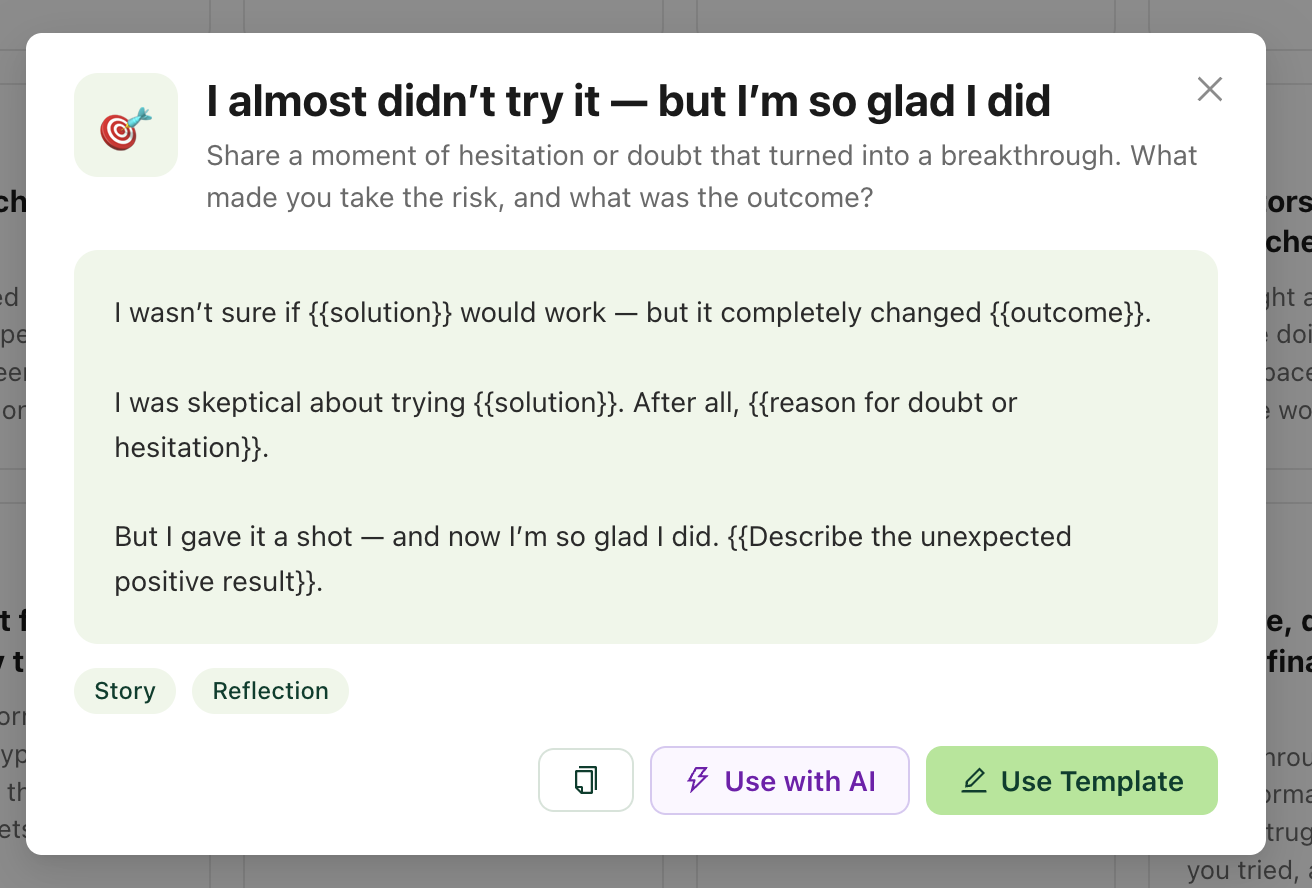
This one gives it to you in the first sentence, then makes you want to know how it almost did not happen. That sequence creates a kind of narrative tension that is hard to scroll past.
The three placeholders define the shape of your story:
- {{solution}}: what you were not sure would work
- {{reason for doubt or hesitation}}: why you almost did not try it
- {{unexpected positive result}}: what actually happened
The hook only works when the hesitation is real. A doubt you manufactured for the sake of the post reads differently than one you genuinely felt. Readers can tell.
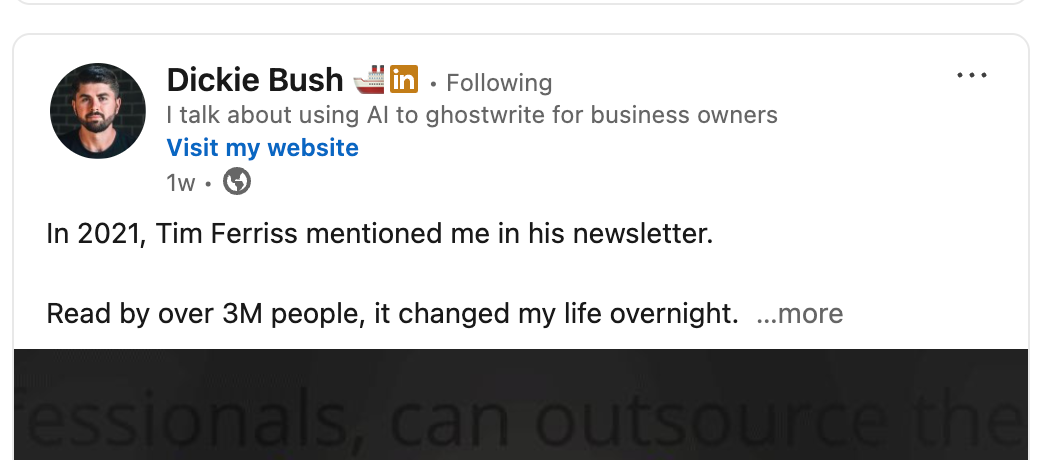
Here is a good real example of this story type. Dickie opens with the outcome before explaining how he got there: "In 2021, Tim Ferriss mentioned me in his newsletter. Read by over 3M people, it changed my life overnight."
The reader immediately wants to know the story behind the result, which is exactly the tension this template is built to create.
2. I Didn't Think I Could Do It — And Then I Did
The hook names the goal and the solution in the same sentence. What makes this template stronger than most transformation formats is the "During" stage.
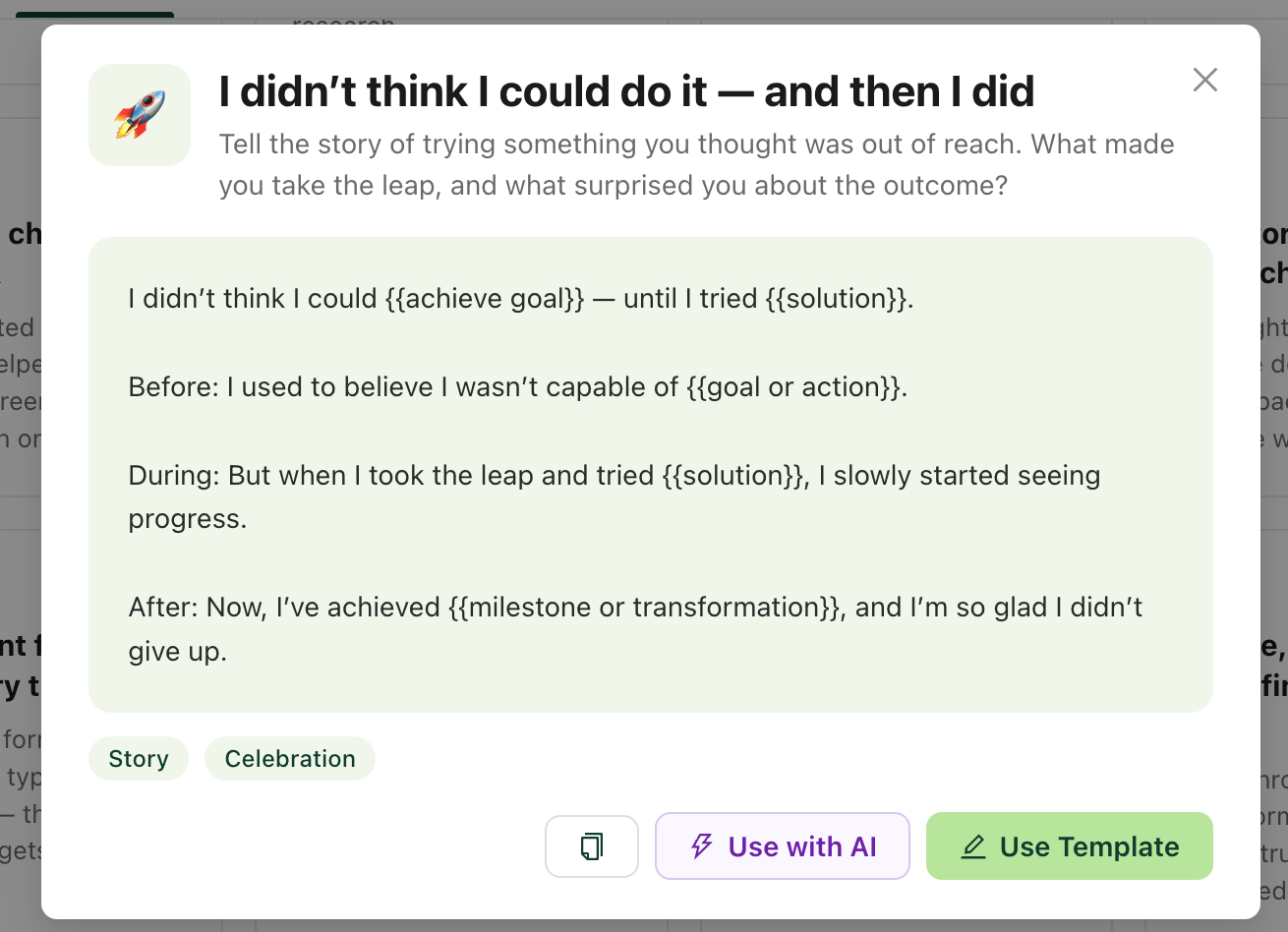
Most people jump straight from the before state to the result. The During is where the real story lives: the first sign of progress, the moment of doubt that almost made you quit, the small shift that changed the trajectory.
Including it is what separates a relatable story from a highlight reel.
The placeholders:
- {{achieve goal}}: what you did not think you could do
- {{solution}}: what changed things
- {{goal or action}}: the specific belief you held about yourself
- {{milestone or transformation}}: where you ended up
The "During" section is what most people skip. That is the moment of progress, the first sign that something was working. Without it, the transformation feels announced rather than earned.
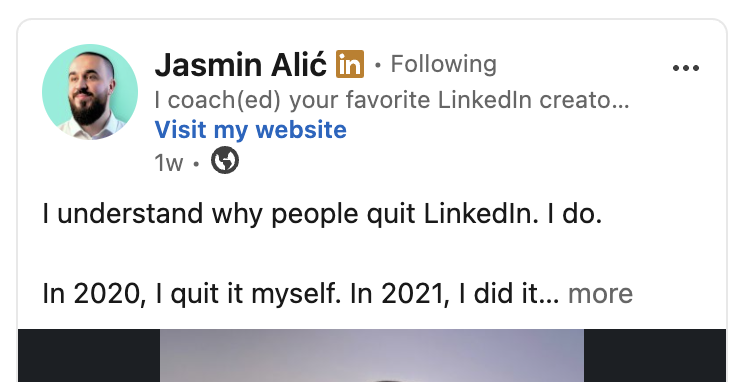
Here is another good real example of this story type. Jasmin opens with empathy before making it personal: "I understand why people quit LinkedIn. I do."
That first line validates the reader's own experience before he reveals he lived it himself, quitting in 2020 and coming back in 2021. The 1,594 comments came almost entirely from people sharing their own version of that same journey.
3. The Obvious Solution Didn't Work — This Did
The hook names two solutions side by side. The power is in the first placeholder: {{wrong solution}}. This needs to be something specific that most people in your audience would also have tried. The more recognizable the "obvious" approach, the more the reader feels implicated before they have even read the second line.
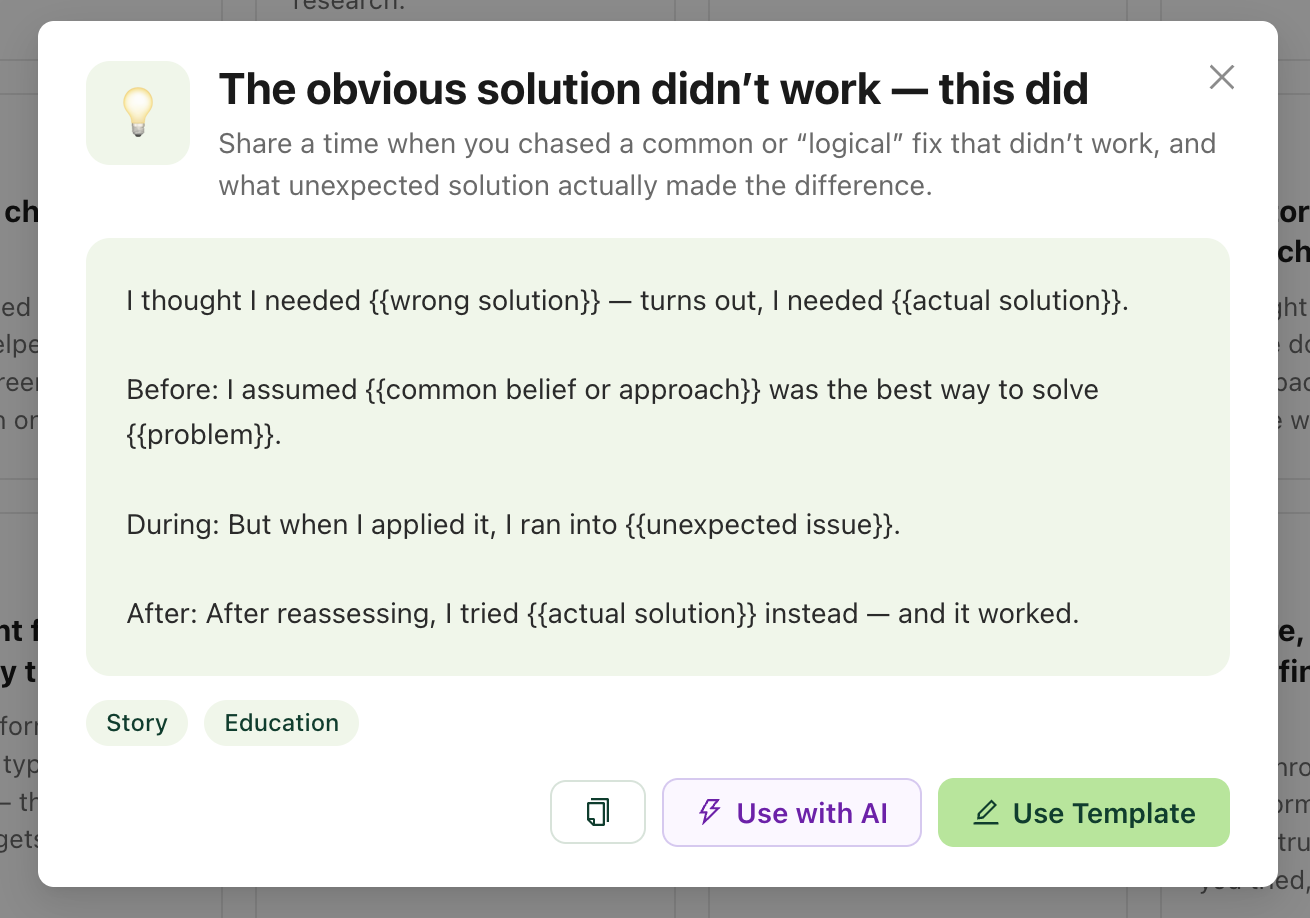
The structure then moves through three labeled stages: Before (the assumption), During (the unexpected problem), After (what actually worked). That sequence gives the post a clear shape without needing to write a narrative from scratch.
The placeholders:
- {{wrong solution}}: the common approach most people take
- {{actual solution}}: what actually worked
- {{common belief or approach}}: the assumption behind the wrong solution
- {{problem}}: what you were trying to solve
- {{unexpected issue}}: what went wrong when you applied the obvious fix
4. It Didn't Go How I Expected — And What I Learned
The template has the tightest structure of any on this list. Mistake, Lesson, Advice. Three labeled sections, one sentence each. No room for vagueness.
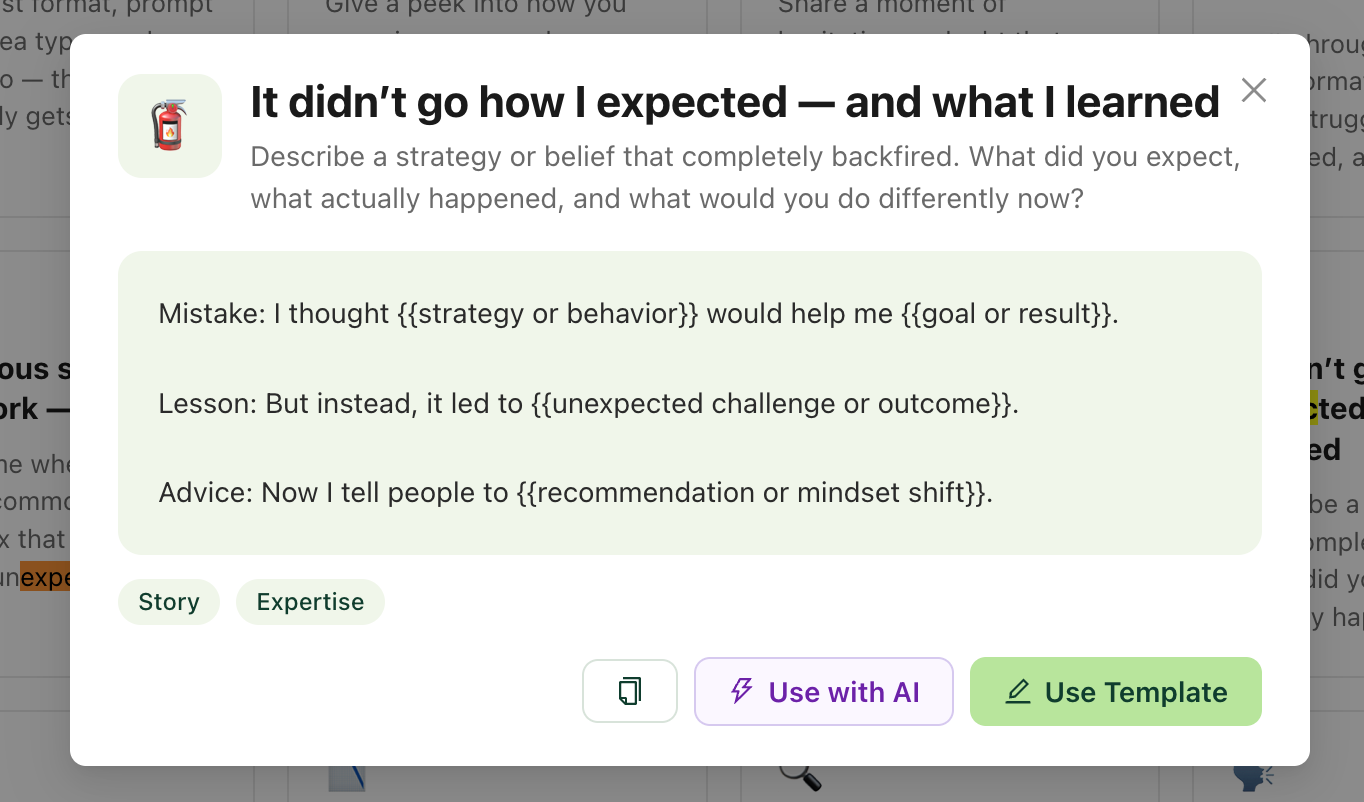
What makes the closing section strong is that the Advice repositions the failure as expertise. You are not just sharing what went wrong. You are sharing what you now tell people because of what went wrong. That shift is what makes the post feel authoritative rather than confessional.
The placeholders:
- {{strategy or behavior}}: what you did
- {{goal or result}}: what you expected it to produce
- {{unexpected challenge or outcome}}: what actually happened
- {{recommendation or mindset shift}}: what you now believe or advise
5. I Wasn't Ready — I Started Anyway
The opening runs a myth-truth contrast before the personal story.
- Myth: you need tons of experience before you put yourself out there.
- Truth: I started with minimal experience and learned by doing. That contrast does two things: it validates the reader who has been waiting to feel ready, and it challenges the belief that is keeping them stuck.
The closing line does not belong to the story. It is a principle the story supports: waiting to be ready keeps more people stuck than unqualified. Moving from personal experience to a universal claim is what gives posts like this their staying power.
The main placeholder is {{field}}, which is where you name the specific area where you started without being ready. The more specific, the more the post resonates with the exact audience you want.
6. I Should've Started Sooner
The hook names two things: the action you delayed and the condition you were waiting for. Then the Mistake section names exactly how long you waited and what you told yourself you needed. The Lesson closes with a single sentence: clarity only comes from doing, not waiting.
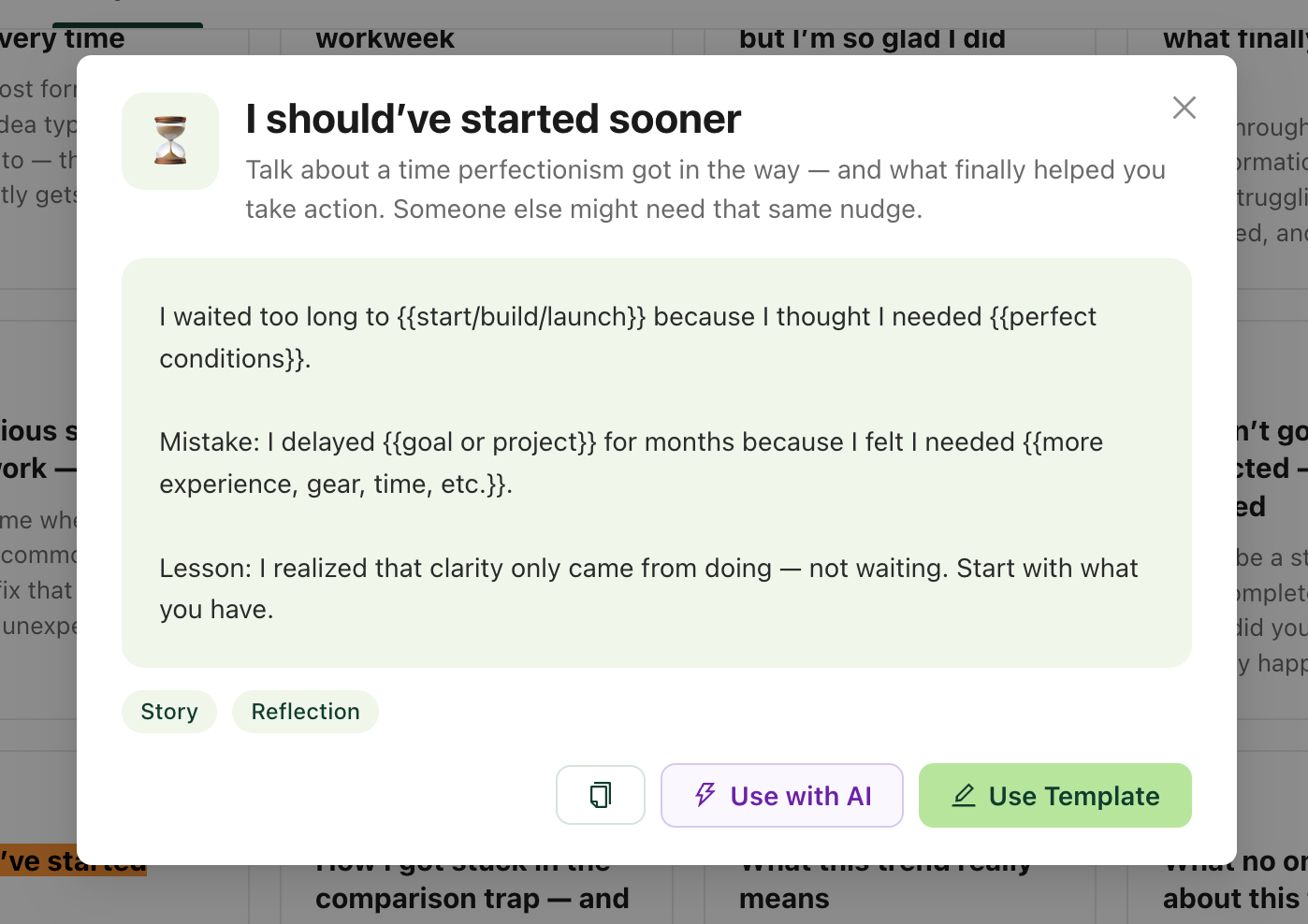
What makes this template work is specificity. The placeholder {{more experience, gear, time, etc.}} is asking you to name the exact thing you were waiting for. "I delayed posting on LinkedIn for six months because I thought I needed a larger portfolio" is a story. "I kept waiting until I felt ready" is not.
The placeholders:
- {{start/build/launch}}: the specific action you kept putting off
- {{perfect conditions}}: what you told yourself you needed first
- {{goal or project}}: the thing you delayed
- {{more experience, gear, time, etc.}}: your specific reason for waiting
How to Turn Any of These Templates Into a Published Post
You have the template. Here is what the process looks like inside Podawaa from that point to a published post.
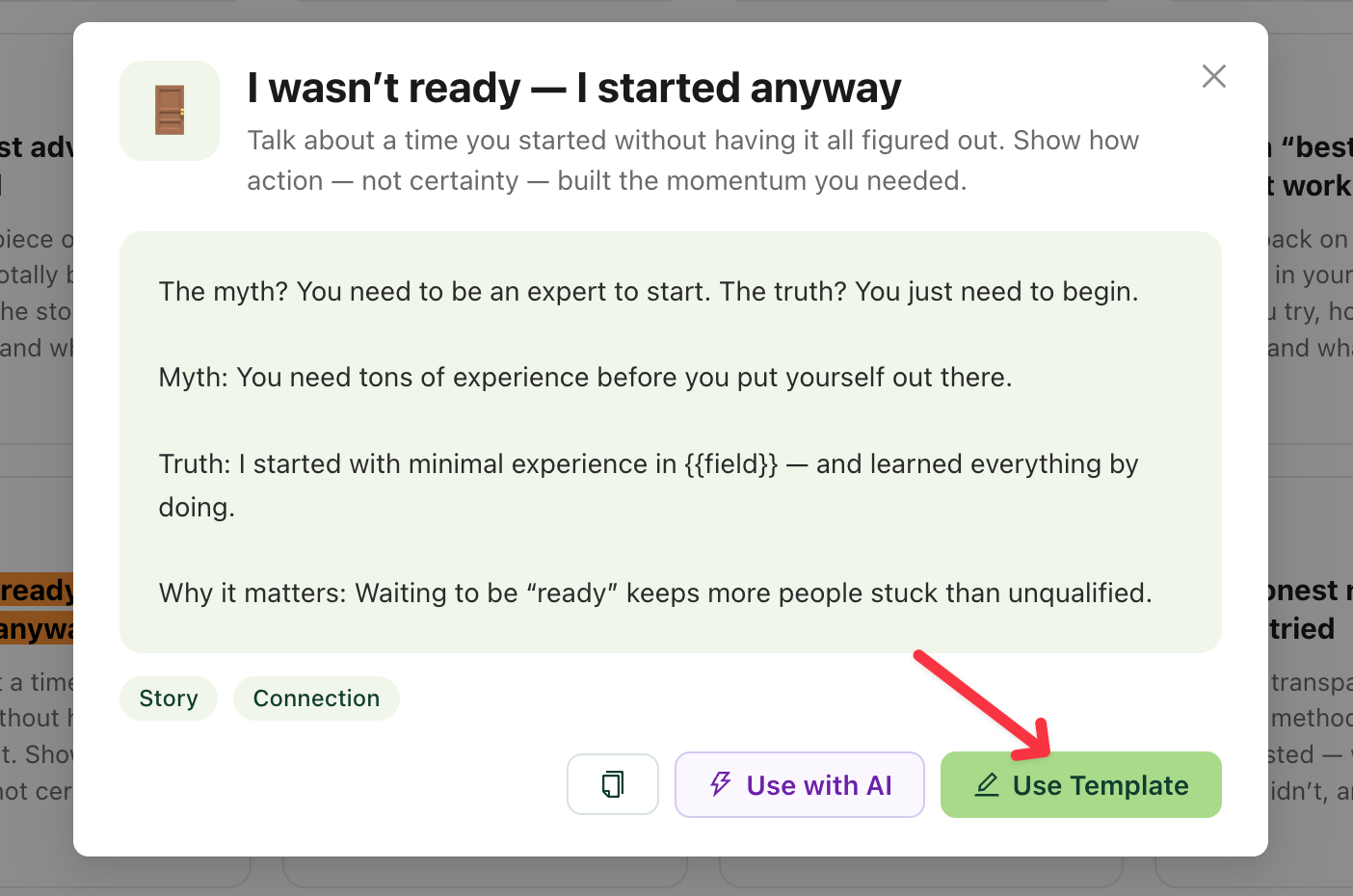
Once you click "Use Template" the structure loads directly into the editor. Replace the {{placeholders}} with your own experience. Keep your sentences short. One idea per line. White space makes story posts significantly easier to read on mobile, which is where most of your audience is scrolling.
If you get stuck on the draft, Podawaa Studio on the right side of the editor can generate a first version from your rough notes. Use it to get something on the page, then rewrite in your own voice. Cut anything that sounds generic. The specific detail only you would know is what makes a story worth reading.
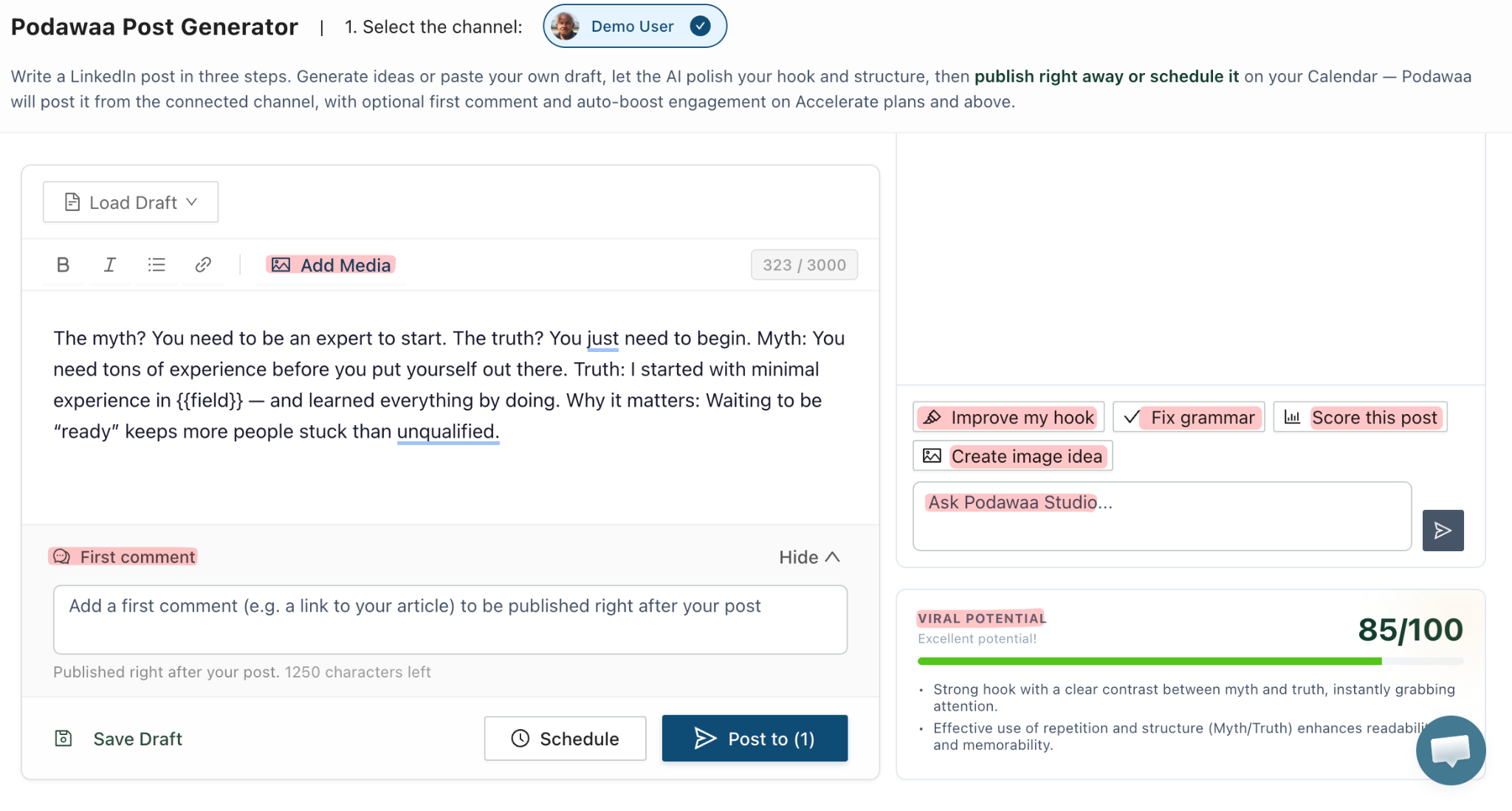
Before you schedule, check the hook. LinkedIn cuts off the preview after two or three lines. If those lines do not give someone a reason to stop scrolling, the rest of the post does not matter. You can ask Podawaa Studio directly: "give me three alternative opening lines for this post."
The score updates in real time as you edit, so you can compare versions before picking one. Our guide on LinkedIn post hook examples has real breakdowns of what makes opening lines work if you want to go deeper.
Add a first comment before you schedule. A question that is easy to answer drives replies in the first hour, which is when LinkedIn decides how widely to distribute the post. We cover exactly how that window works in our breakdown of the first hour on LinkedIn.
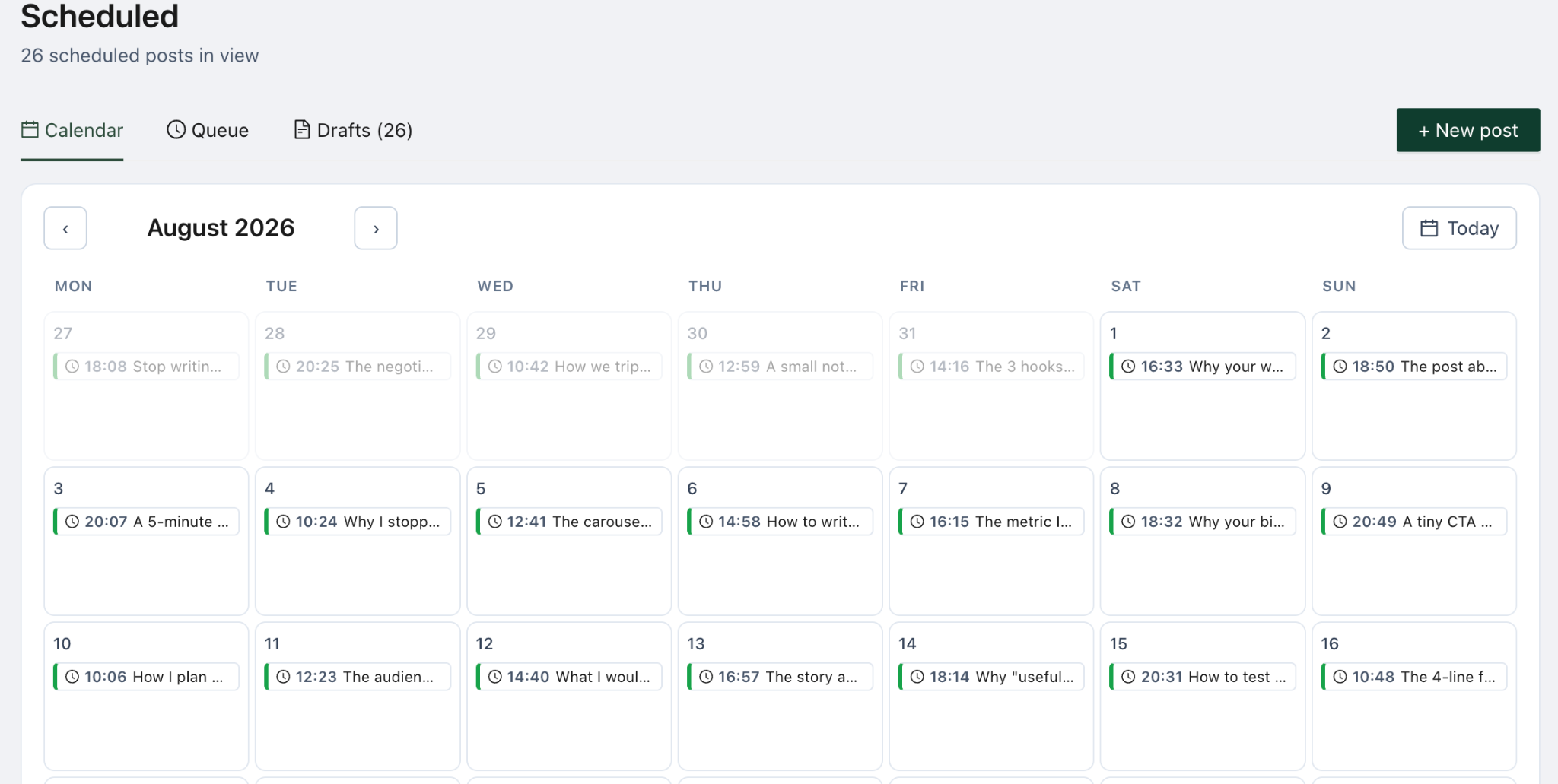
Then schedule or publish directly from the editor. The calendar shows the full month so you can see where this post sits in relation to everything else you have planned and adjust the timing before it goes live. Start creating today!
7. The Moment I Realized I Was Holding Myself Back
The hook gives you most of the sentence: "I didn't see it at first. But then {{trigger moment}} happened, and I realized I was holding myself back. Here's what I did next." The only placeholder is the trigger. Everything after that is yours to write.
That structure works because it delays the explanation. The reader knows what happened before they know how or why, which creates a reason to keep reading.
The trigger moment needs to be a specific event: a conversation, a rejection, a moment where someone said something that reframed how you saw yourself. Vague triggers produce vague posts.
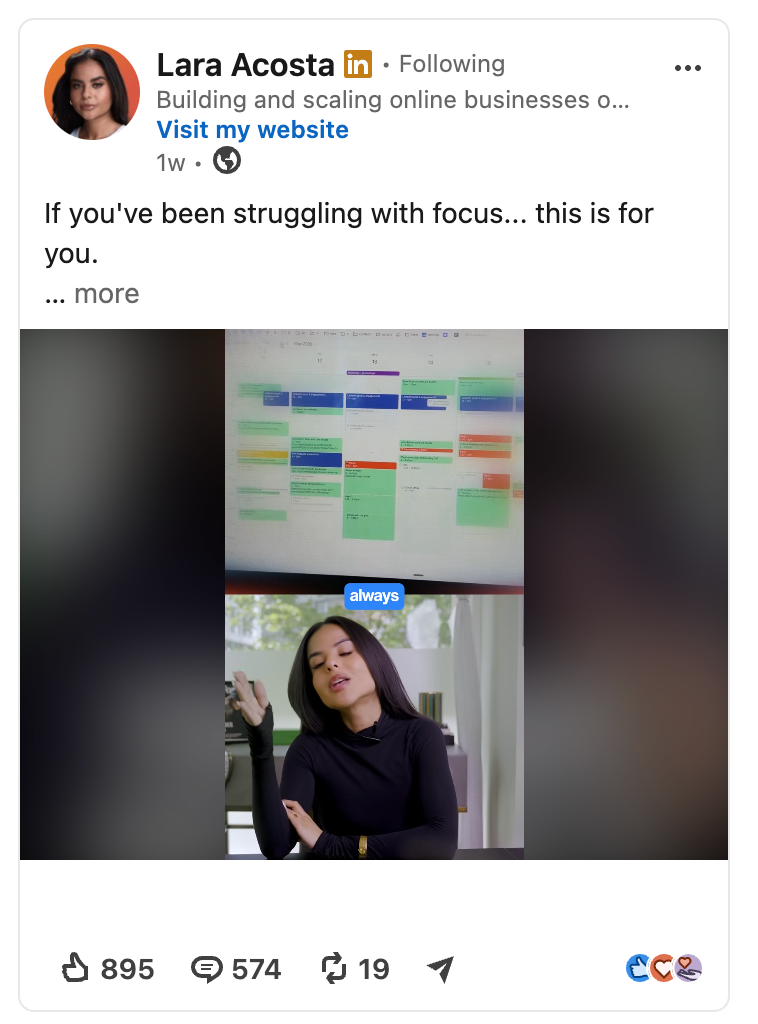
Another example from Lara. The hook speaks to the reader's struggle before making it about Lara at all: "If you've been struggling with focus... this is for you." Seven words in, the right reader already feels seen. That is why 574 people commented before even knowing what the content was.
8. The Worst Advice I Ever Followed
The template opens with a question to the audience before turning to the creator's own story. That sequence implicates the reader before they have read the personal example.
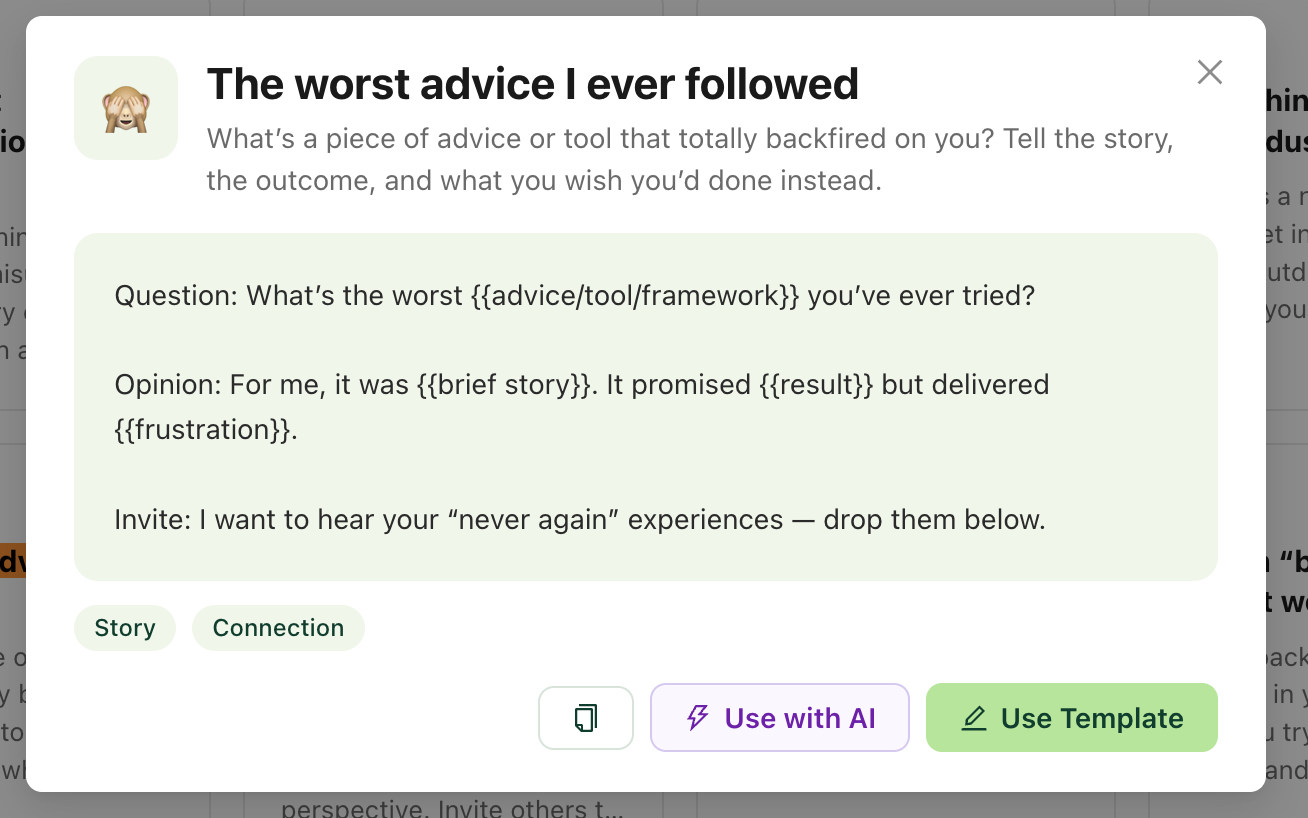
The closing invite ("drop your 'never again' experiences below") is not optional. It is what turns this from a reflection into a thread.
The Opinion section is where the story lives. The placeholder asks for a brief story, not a full breakdown. One or two sentences maximum: what it promised, what it delivered, how those two things differed.
The placeholders:
- {{advice/tool/framework}}: the specific thing that backfired
- {{brief story}}: what happened when you followed it
- {{result}}: what it promised
- {{frustration}}: what it actually delivered
This template consistently generates more comments than most story formats because it asks a question the reader can answer from their own experience. The invite at the end is not decoration.
9. The Quick Fix That Made Things Worse
Shortcuts carry a different emotional charge than strategies. People know they are cutting corners when they reach for one, which makes the failure feel more honest and more relatable than a strategy that simply did not work. That distinction is why this template and the "obvious solution" template feel different even though both describe a wrong approach.
The Lesson section names the secondary problem the shortcut created, not just that it failed. The Advice section closes with the longer-term approach that actually worked, which is where your expertise appears.
The placeholders:
- {{problem}}: what you were trying to solve
- {{quick solution}}: the shortcut you tried
- {{secondary problem or setback}}: what it caused instead
- {{longer-term strategy or habit}}: what eventually worked
10. The Mistake I Can't Forget — And What It Taught Me
The hook is provided almost entirely: "It's been {{time}}, and I still think about that one {{mistake}}. But here's what it taught me — and why I'm not hiding from it anymore."
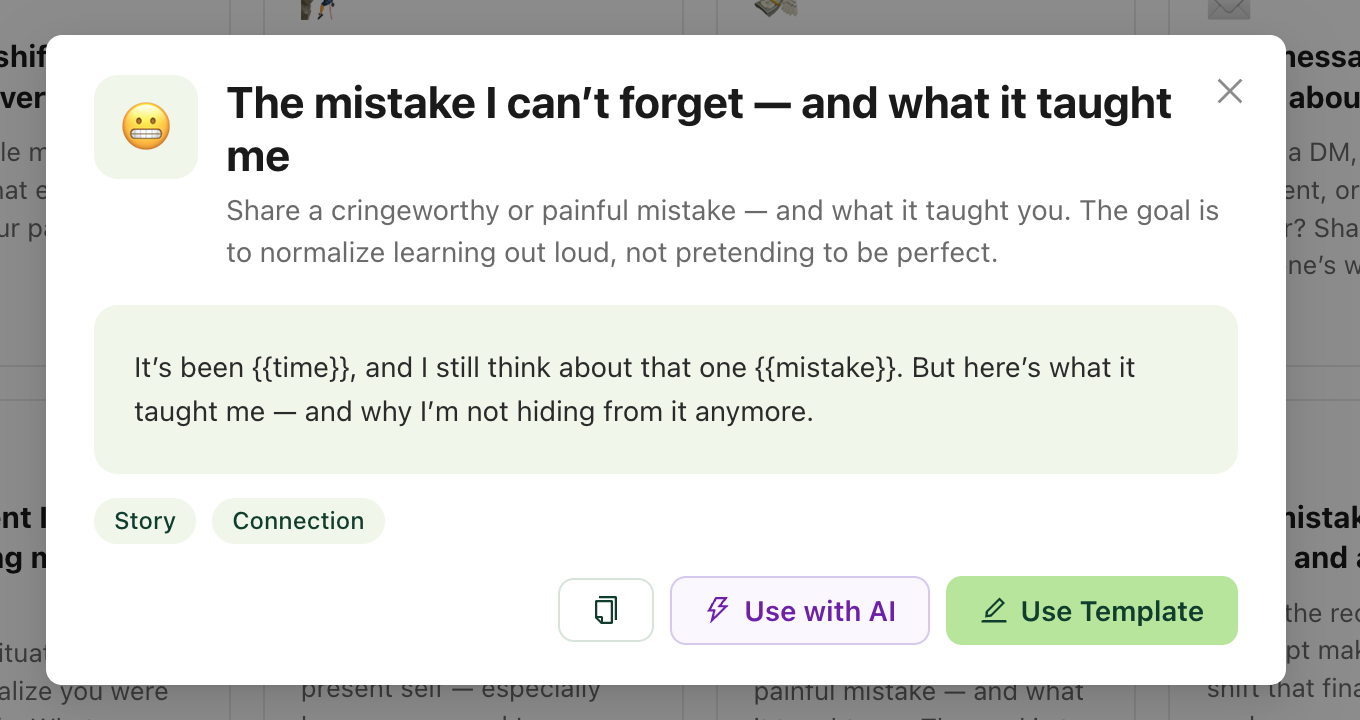
The phrase "I'm not hiding from it anymore" is what makes this different from a generic mistake post. It signals that the creator has processed the experience and is choosing to share it.
The two placeholders in the hook: how long ago and what the mistake was. Both need to be specific. "Two years ago, and I still think about losing that client" is a story. "A long time ago, and I still think about that mistake" is not.
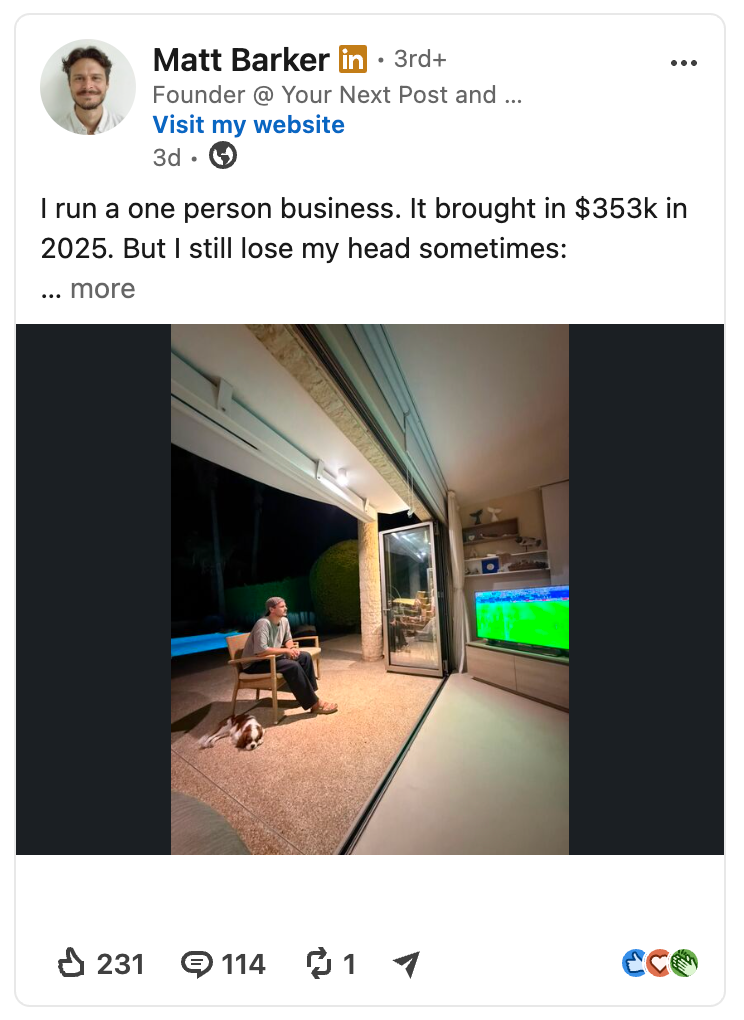
Matt pairs a revenue number with an honest admission in the same breath: "$353k in 2025. But I still lose my head sometimes." The colon at the end signals specific examples are coming, and that gap between visible success and real struggle is what drives the comments.
11. How I Handle Things Now (vs. Then)
The contrast does all the structural work. Old me: one specific behavior. New me: the opposite. Then one line explaining what drove the shift. The template keeps it to three sections deliberately because more than that turns a contrast post into an essay.
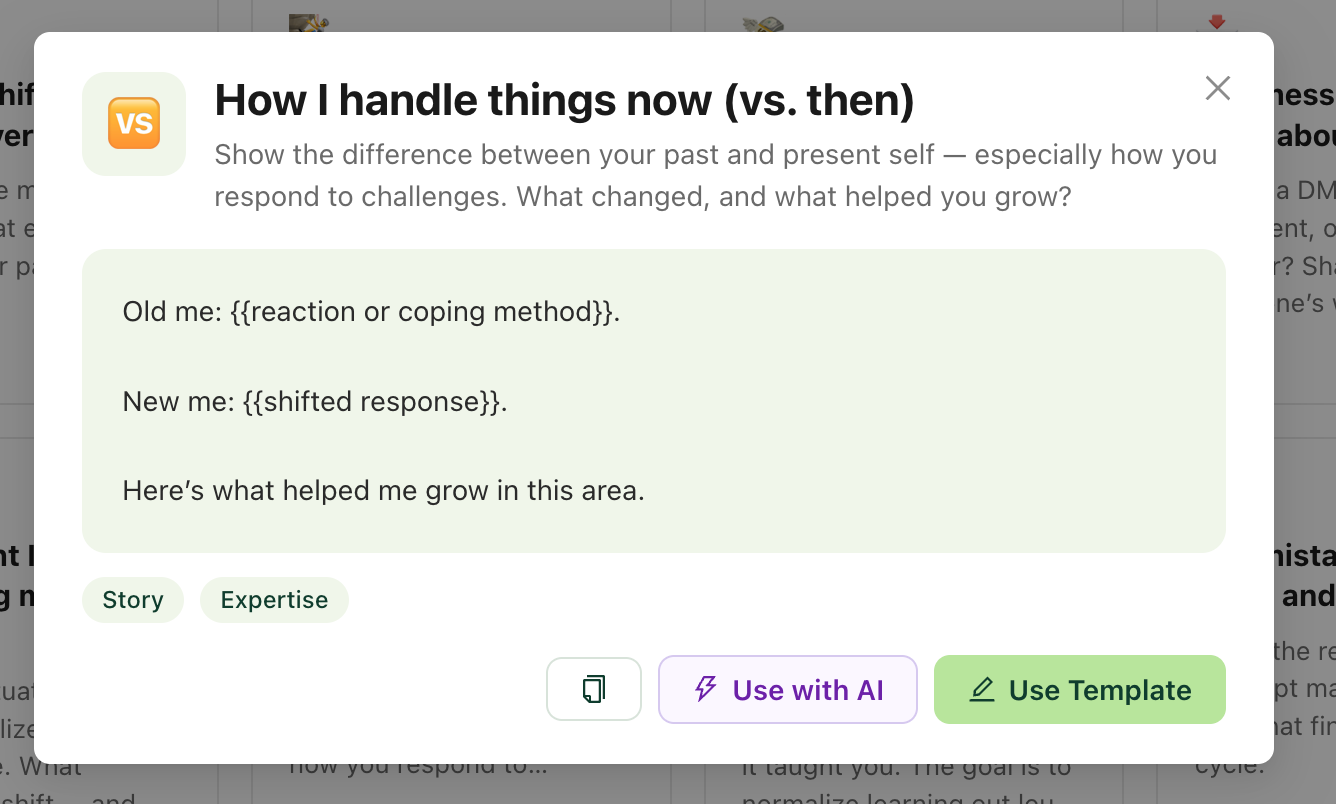
What most people get wrong is making the contrast too vague. "Old me: worried about everything. New me: calm and focused" is a caption, not a story. The contrast needs to be behavioral and specific enough that someone in the same position would recognize themselves in the before state.
The placeholders:
- {{reaction or coping method}}: the specific old behavior
- {{shifted response}}: the specific new behavior
12. Something I've Changed My Mind About
The template opens with a question to the audience, shares the creator's own answer with the belief change, and closes with an invitation to reply. The difference from the "worst advice" template is the tone. This one is about perspectives shifting, not mistakes backfiring. It tends to attract a more reflective kind of engagement.
The Opinion placeholder reads: "I used to think {{belief}}, but {{experience}} completely shifted my perspective." The experience in the middle is everything. Without it, the belief change sounds arbitrary. With a specific experience, it sounds like something that actually happened to a real person.
The placeholders:
- {{topic}}: the subject you changed your mind on
- {{belief}}: what you used to think
- {{experience}}: the specific thing that shifted it
Changing your mind publicly is rare on LinkedIn. Most creators work hard to appear consistent. That rarity is exactly why this format stands out when done with genuine intellectual honesty.
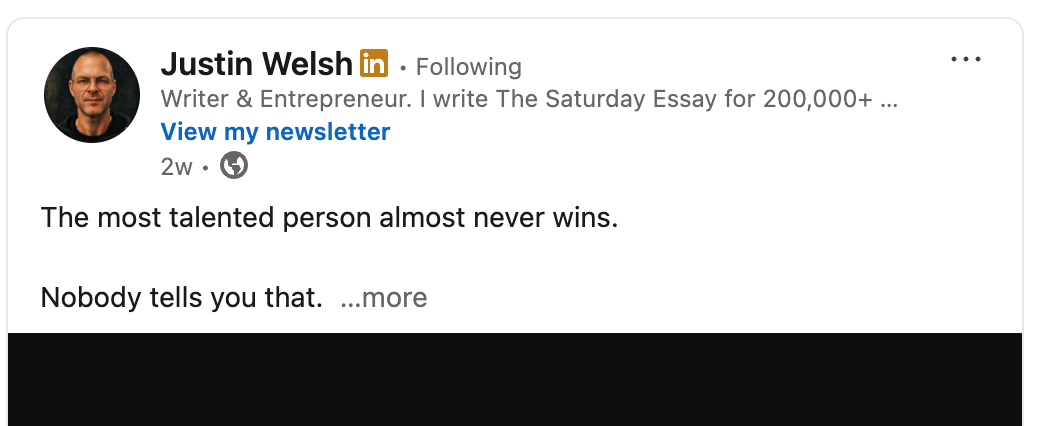
Two sentences, no setup: "The most talented person almost never wins. Nobody tells you that." The second line positions the post as something the reader was not supposed to know, which is what makes people tap "see more" before they even decide if they care about the topic.
13. The Quiet Shift That Changed Everything
The hook sets up a contrast between expectation and reality: "I thought success looked like {{expectation}}, but it actually started when I {{unexpected action or moment}}."
What makes this template work is the gap between those two placeholders. The expectation should be something visible and obvious, the kind of goal most people in your position would recognize. The unexpected action or moment should be something small, specific, and unlikely to appear on anyone's vision board.
The smaller the shift, the more powerful the post. Reserve this template for the moments that seemed insignificant at the time but changed your direction in a way you only understood later.
The placeholders:
- {{expectation}}: what you assumed success would look like
- {{unexpected action or moment}}: the small thing that actually changed everything
14. The Message I Still Think About
The hook opens with extreme specificity: "It was a DM. Just one sentence." Before the reader knows the topic, they know the format and the size.
That specificity creates intimacy. Then the single placeholder arrives: {{topic}}. And the closing line — "I still come back to it when I need perspective" — signals that this is not a story the creator manufactured. It is one they have been sitting with.
The one placeholder in the hook is {{topic}}, which is where you name the subject the message reshaped. Everything that follows is yours: what the message actually said, who sent it, what you were going through when it arrived, and why it still matters.
15. The One Question That Changed My Strategy
The hook puts the question front and center: "Someone once asked me: '{{question}}' — and it changed everything." The reader sees the question before they understand its significance, which is the reverse of how most posts handle insight.
Usually people explain the context, then reveal the question. This template skips the context and leads with the question, which creates immediate curiosity.
The placeholder is the question itself. It needs to be short enough to quote directly and specific enough that the reader can see why it would be disorienting. Abstract questions ("what do you really want?") land flat. Specific questions ("why are you still optimizing for approval?") land differently.
16. When Good Advice Didn't Work for Me
The opening line does something unusual: it names the advice as good before explaining that it failed. "I followed {{popular advice}} to the letter — and it backfired."
That framing matters because it signals the creator is not being contrarian for the sake of it. They genuinely tried something that works for other people. It just did not work for them.
The four labeled sections keep the story tight: What I Tried, What Happened, Lesson. The What I Tried section names the advice and the promised result. What Happened names the problem it created. The Lesson closes with what actually works for your specific situation, which is the most important sentence in the post.
The placeholders:
- {{popular advice}}: the specific advice you followed
- {{common advice or tip}}: what you kept hearing
- {{desired result}}: what it was supposed to produce
- {{problem or unexpected outcome}}: what it actually produced
- {{what actually works instead}}: the real lesson
17. One Thing We Stopped Doing This Year — And Why
The hook names the cut and frames it as risky: "We removed {{task, client type, offer}} from the business this year. It felt risky, but it's made space for better things. Here's the story." Three sentences, and the reader already knows what was removed, that it felt like a gamble, and that it worked out. The rest of the post is the explanation.
Subtraction posts are rarer than addition posts on LinkedIn, which is exactly why they stand out. Most LinkedIn content is about adding things: new habits, new skills, new strategies. A post about intentionally cutting something signals clarity and confidence, which builds authority differently than a post about growth.
The placeholder is {{task, client type, offer}}, which is where you name what you removed. The more specific, the better. "We stopped taking on clients without a minimum contract value" is a story. "We cut something from the business" is not.
This template works best when the thing you stopped is something most people assume you should keep doing. If the cut is obvious in retrospect, the post loses its tension.
All 17 Storytelling Templates at a Glance
All of these templates are available inside Podawaa under the Story filter. Select one, open it in the editor, and replace the placeholders with your own experience.
Frequently Asked Questions
What makes a LinkedIn story post engaging?
A strong story post starts with a specific moment rather than a general observation, creates tension in the first line, shows the challenge before the resolution, and ends on one clear takeaway or question. The most common mistake is opening with the lesson instead of the moment, which removes the tension before the reader has a reason to care.
How long should a LinkedIn story post be?
Most high-performing story posts run between 150 and 300 words. Long enough to develop the narrative, short enough to read in under a minute. Every sentence should move the story forward. If a line does not add something to the before, during, or after of the story, cut it.
Do story posts perform better than educational posts on LinkedIn?
They tend to generate more comments and shares, while educational posts tend to earn more saves and profile visits. The best LinkedIn content strategy mixes both. Story posts build connection. Educational posts build authority. For a practical breakdown of what to post and when, see our guide on LinkedIn for personal branding.
Can I use AI to write LinkedIn story posts?
AI can help you write a first draft faster, but story posts are the format where your specific experience matters most. A story generated entirely by AI has no real tension because the events never happened. Use Podawaa Studio to get a first draft on the page, then rewrite it with your own details, your own voice, and your own specific outcome.
How often should I publish story posts on LinkedIn?
One or two story posts per month is a good starting point. Stories take more personal investment than tips or lists, and readers can tell when a story is manufactured. One honest, specific story outperforms four generic ones. Mix story posts with educational content and opinions for a balanced monthly calendar. If you are still building your posting schedule, our guide on how often to post on LinkedIn covers the data behind frequency and consistency.
Which LinkedIn story format works best?
It depends on where you are in your journey. Hesitation and failure stories tend to generate the most comments because they are the most relatable. Transformation stories tend to earn the most shares because they are aspirational. Contrarian stories attract the most debate. Use a mix of structures across your monthly content plan rather than relying on one format repeatedly.