Most LinkedIn advice tells you to post consistently, use strong hooks, and add a question at the end.
All of it is directionally correct, but none of it tells you why a post from a smaller creator outperforms one from a founder with a six-figure following.
That's why we reviewed a set of high-performing LinkedIn posts across marketing, SaaS, entrepreneurship, and personal branding.
For each post, we recorded the hook structure, format, engagement numbers, and whether a first comment was present. We also ran posts through Podawaa's Viral Potential scoring system to test whether the score predicted real-world results.
Here is what we found.
Top Findings
- A post scoring 85/100 on Podawaa's Viral Score generated 76x more likes than a post scoring 55/100, posted by a more well-known creator
- Posts naming a specific audience in line one averaged more than 10x the engagement of posts opening with "everyone" or "most people"
- A contrarian text post from the same creator generated 5.5x more comments than an educational carousel posted in the same week
- Milestone posts using "we" generated 185x more comments than milestone posts using "I," with the same type of announcement
- Every high-comment post we reviewed had a first comment with a direct question
- Three grammar errors in the first three lines correlated with a post earning 12 likes despite a well-designed carousel
Our Methodology
For each post we reviewed, we recorded:
- The exact first line, before LinkedIn's "see more" cut-off
- Post format: text only, carousel, image, or meme
- Whether the first line named a specific audience
- Whether the creator added a first comment, and whether it contained a question
- Actual engagement: likes, comments, and reshares
- Podawaa's Viral Potential score (out of 100), which rates hook strength, formatting, and overall structure
We focused on posts that generated unusually high or unusually low engagement relative to what the creator's follower count would predict. The goal was to find patterns that explained the gap, not just describe the outcomes.
We did not control for posting time, follower count, or industry. These findings reflect patterns across the posts we reviewed, and should be treated as directional signals rather than statistical proof.
Before we get into the findings, here is the full workflow we use to apply these principles inside Podawaa, from writing the hook to checking the Viral Score before publishing.
Finding 1: Podawaa's Viral Score Predicted Real Engagement Across Every Post We Tested
The most direct test we could run: take a post with known engagement results and run it through Podawaa's Viral Potential tool. If the score correlates with real-world performance, it is a meaningful pre-publish signal.
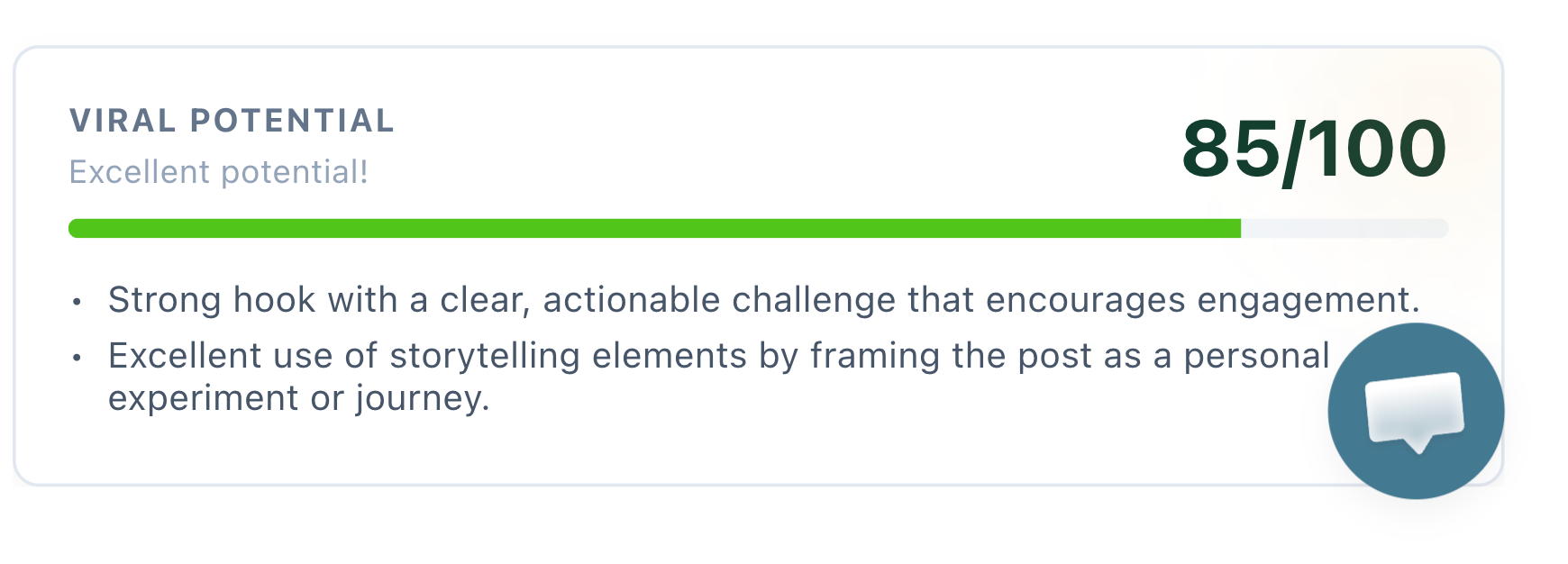
Across every post we tested, the correlation held.
Let’s take a LinkedIn post example opened with these two lines:
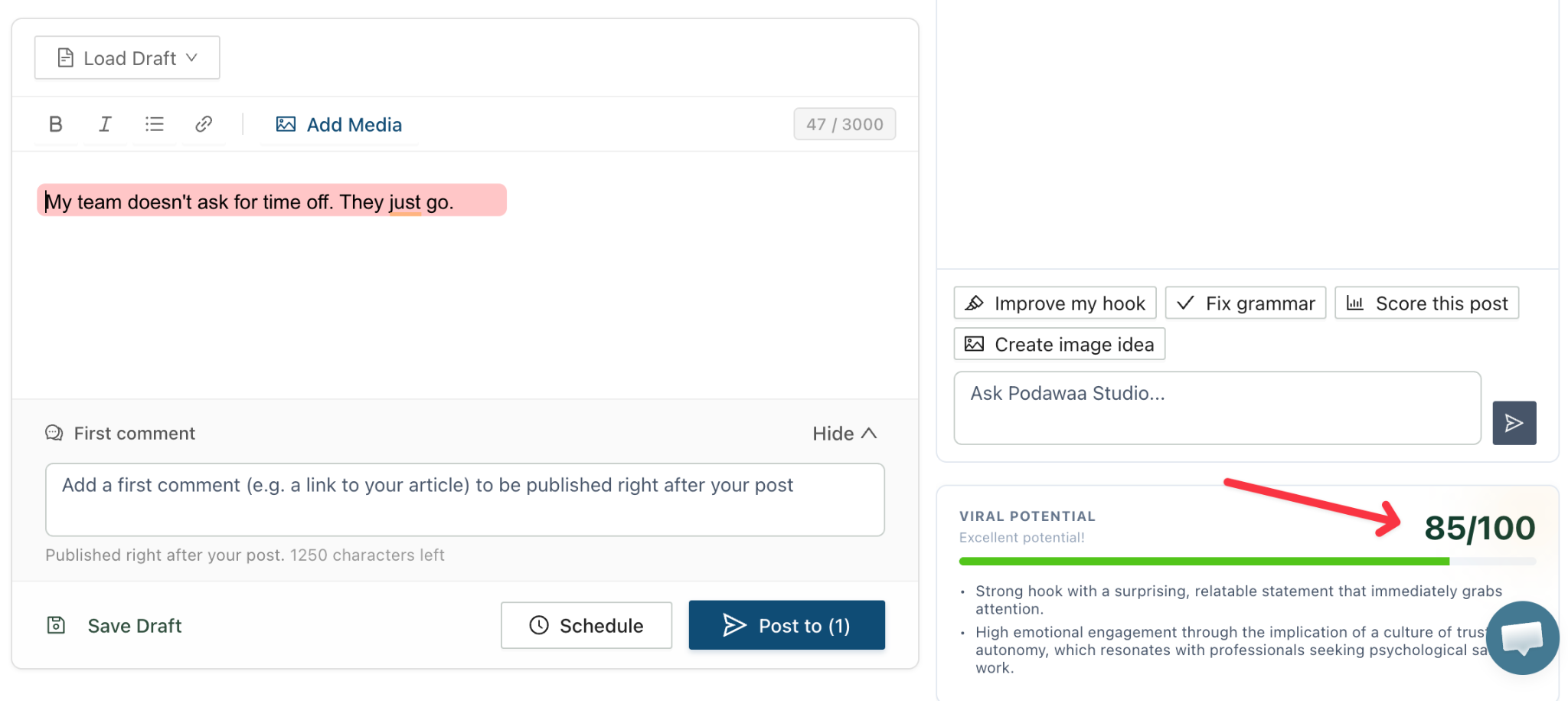
"My team doesn't ask for time off. They just go."
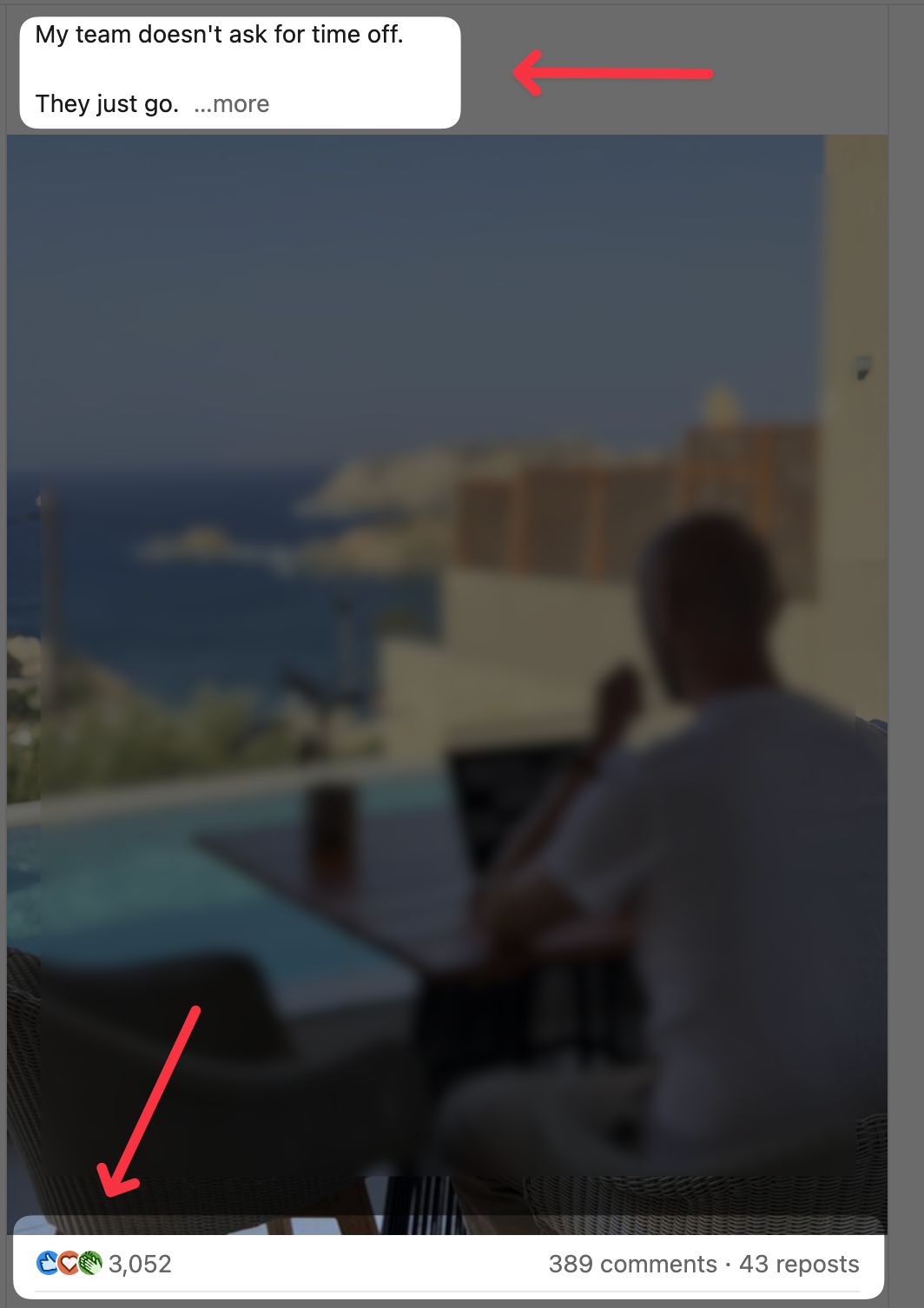
Podawaa scored it 85/100: "Strong hook with a surprising, relatable statement that immediately grabs attention. Minimalist formatting enhances readability and creates a punchy, impactful delivery."
Real result: 3,040 likes, 388 comments and 43 reposts!
Another LinkedIn post example with almost 90K followers opened with: "TALK To Your Customers"
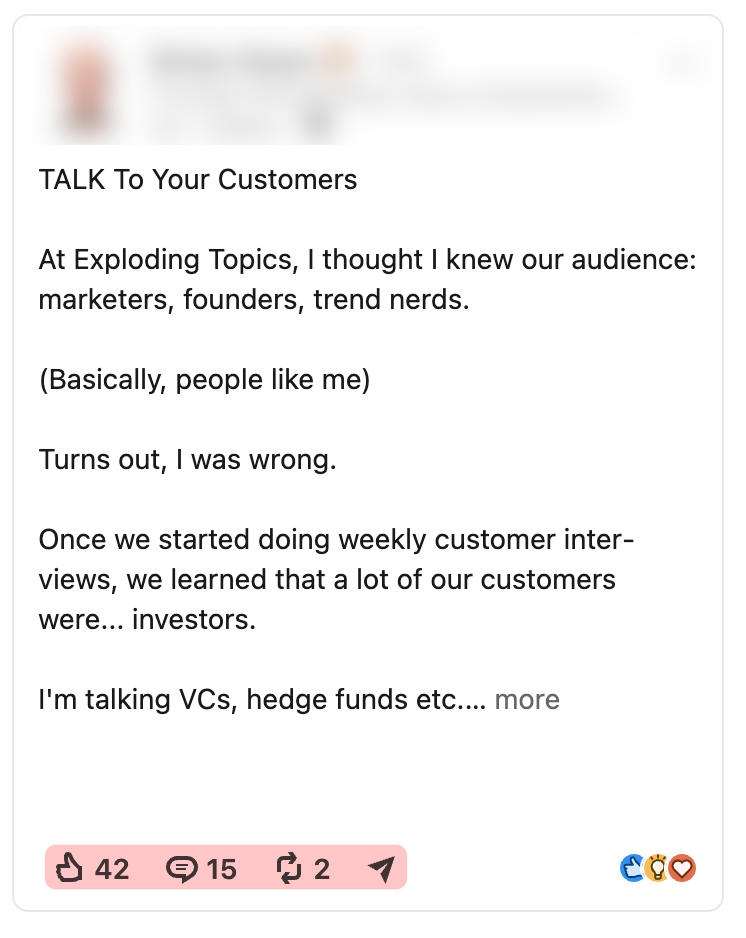
Podawaa scored it 30/100: the hook creates curiosity but starts mid-thought, and the structure does not build tension before the cut-off.
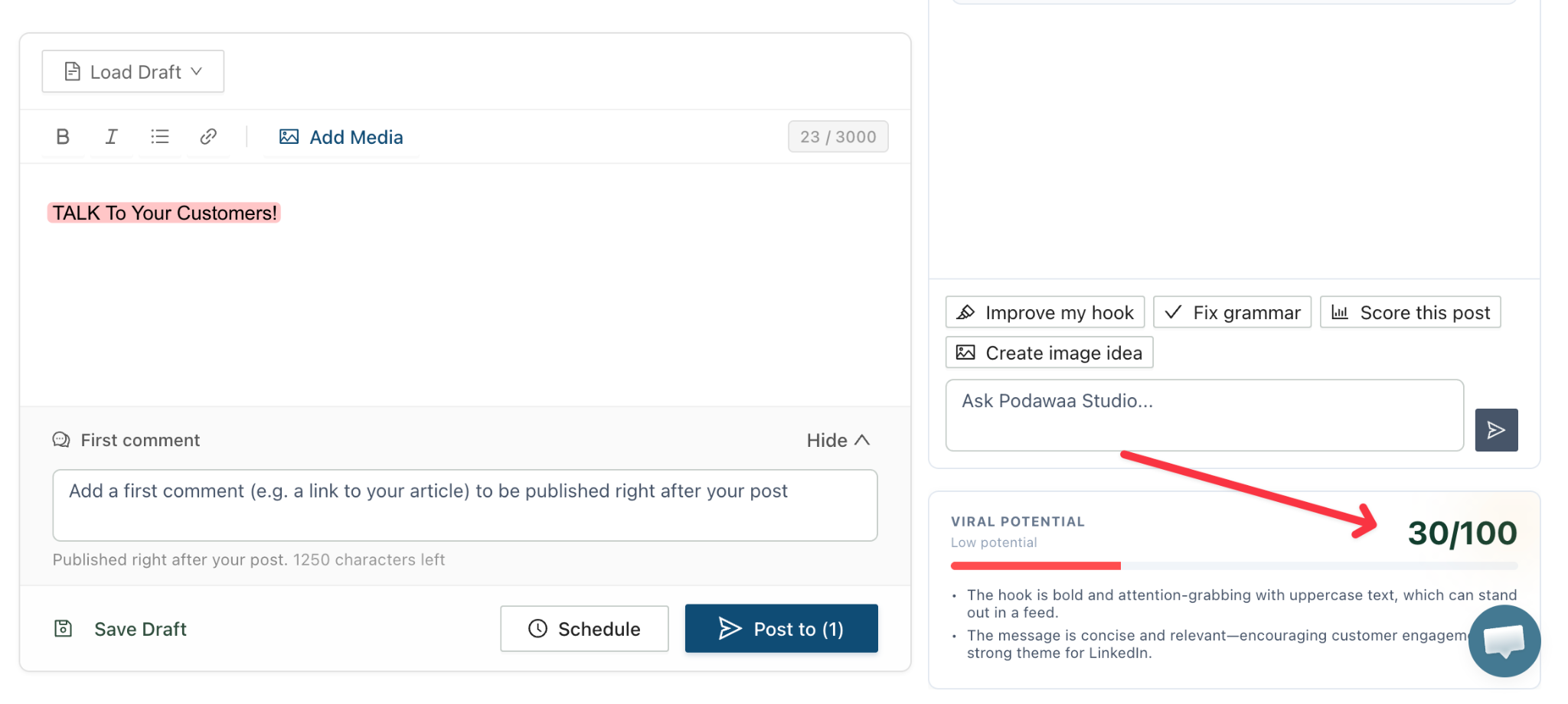
Real result: 42 likes, 15 comments.
The creator with the larger audience and the stronger brand recognition got 76x fewer likes. The post with the stronger hook score outperformed by the same margin.
Two posts by the same smaller creator scored 65/100 each. Both generated under 25 likes.
The score gap between 85 and 55 translated to a 76x difference in likes, across creators with different audience sizes and topic areas.
A score below 65 almost always reflects a hook that explains the post instead of creating tension. Rewrite the first two lines before publishing anything. The rest of the post rarely needs the same attention.
Finding 2: Naming the Exact Audience in Line One Correlated With 10x Higher Engagement
Two posts that explicitly named their audience in the first line generated an average of over 1,100 likes. Two posts that opened with "everyone" or "a few" averaged under 30 likes.
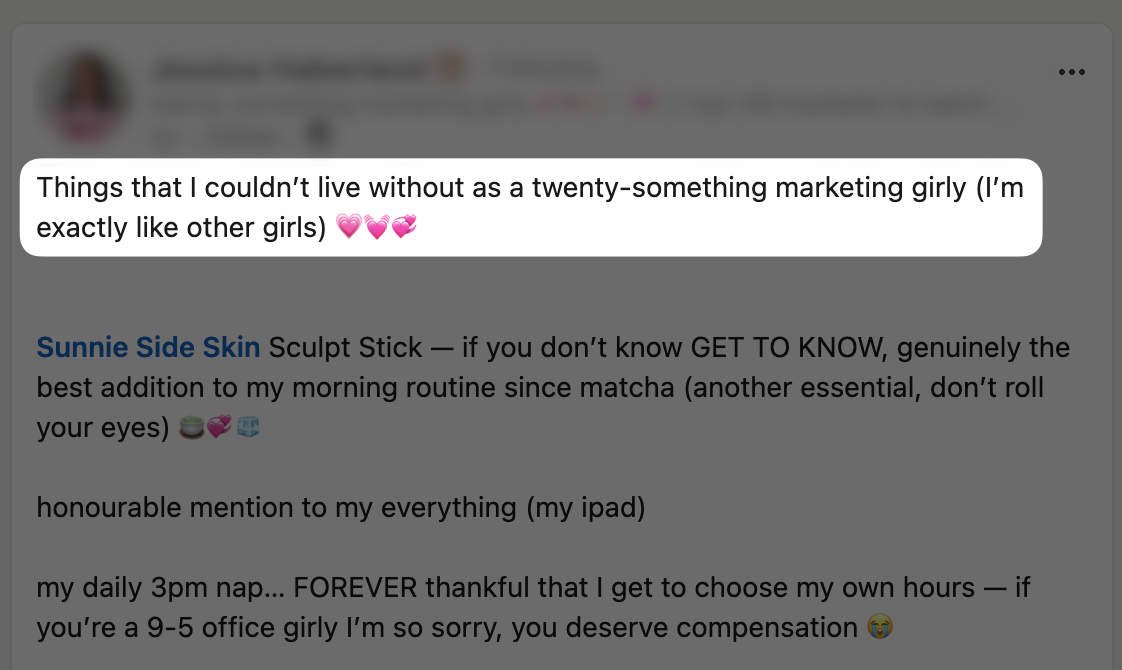
Another viral LinkedIn post example opened with: "Things that I couldn't live without as a twenty-something marketing girly" with 1,381 likes and 175 comments.
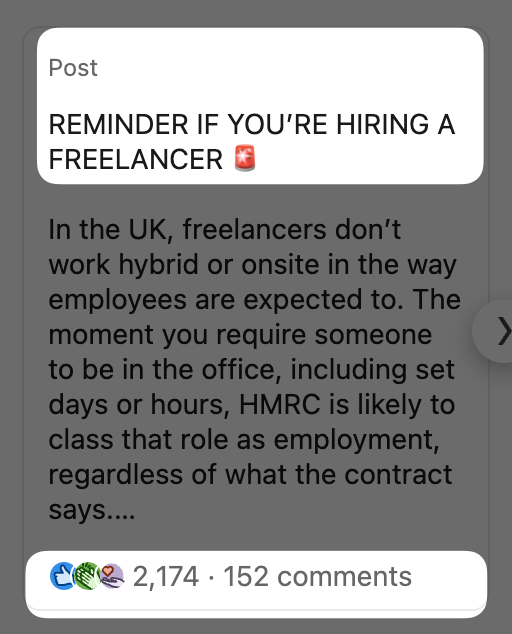
Another example opened with the single word: "FREELANCERS" with 2174 likes and 152 comments.
Two other posts from similar-sized accounts opened with "everyone" and "a few LinkedIn creators." Both generated under 25 likes each.
The content in the lower-performing posts was not weaker. The difference is whether the first line creates an immediate "that's me" moment. "FREELANCERS" does it in one word. "Everyone" does not do it at all.
Before publishing, check whether your first line names the exact person you are writing for. Not "everyone," not "most marketers," not "we all know." The specific job title, situation, or identity that makes the right reader stop immediately.
Finding 3: The Highest-Performing Post Had an 11-Word Hook
The two-line hook is 11 words. It does three things: states something surprising, implies a management philosophy, and creates a question without asking it. The reader wants to know why a team would not ask for time off, before they have finished reading.
The lowest-scoring hook we tested had 18 words in line one, plus a company name, plus a list of audience types. The reader did not know whether to react to the advice or the context before the cut-off.
LinkedIn shows roughly 2-3 lines before the "see more" tap. Every extra word in those lines competes for the next tap rather than earning it.
One consistent signal in posts scoring above 80 on Podawaa: the first line creates a gap between what is stated and what is implied. The reader is already asking a question before the second line begins.
One consistent signal in posts scoring under 65: the first line resolves itself. It describes the post instead of opening it.
Finding 4: A Contrarian Text Post Generated 5.5x More Comments Than an Educational Carousel, From the Same Creator
We found two posts from the same creator published within the same time period to the same audience.
The educational carousel on AI search strategy: 102 likes, 15 comments.
The contrarian text post opening with: "You're not going to fix your pipeline by pressuring marketers to drive leads on social" with 380 likes and 83 comments.
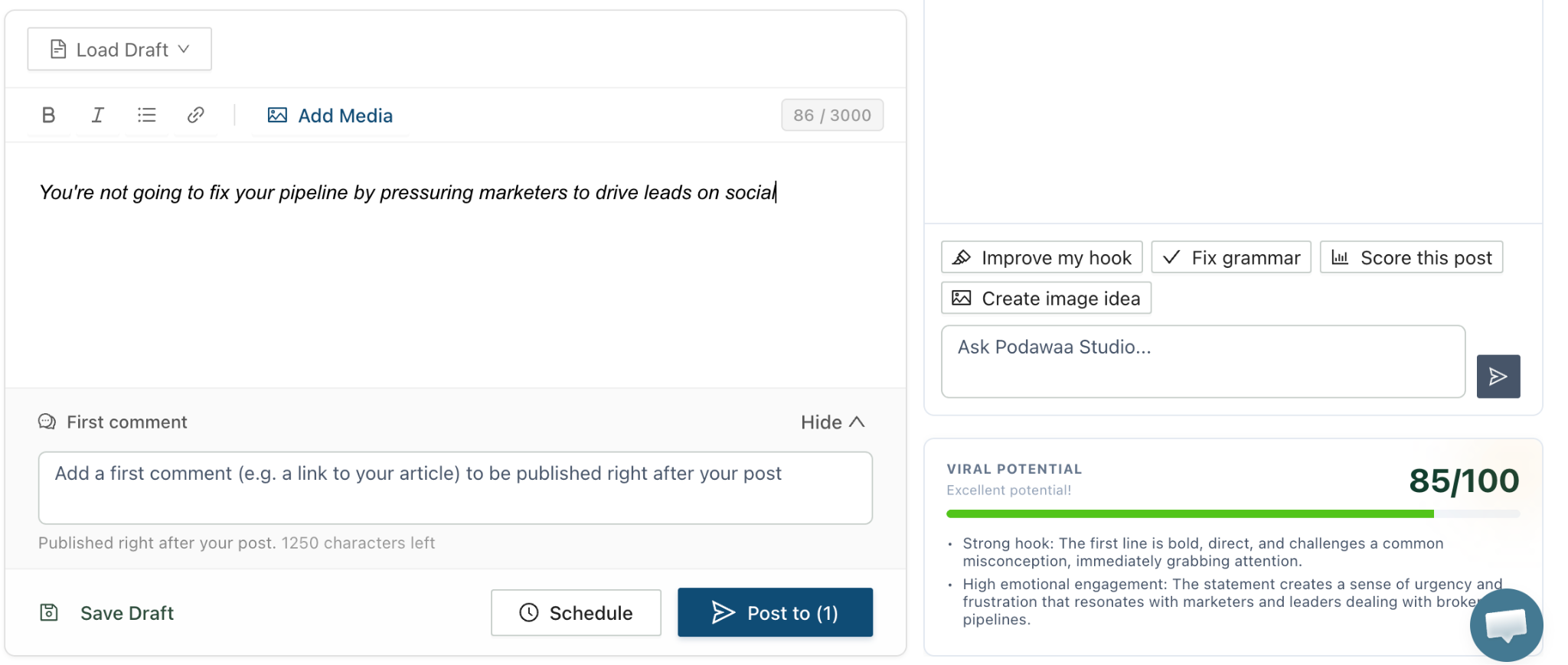
That is 3.7x more likes and 5.5x more comments from the same follower base, in the same week, on a related topic.
The carousel informed. The contrarian post challenged a belief. People save information. They respond to challenges because a post that challenges a belief gives the reader an immediate reason to take a position in the comments.
This does not mean carousels underperform in general. Our LinkedIn impressions case study shows that carousels consistently earn more saves and profile visits than text posts. The format serves a different goal. If you want comments and conversation, contrarian text posts win.
If you want saves and profile views, educational carousels win. The mistake is expecting both from the same format.
If you want to see the story formats that consistently drive comments, we broke down 17 of them with real creator examples in our LinkedIn storytelling post examples guide.
Finding 5: "We" Generated 185x More Comments Than "I" in Milestone Posts
Two milestone posts. Same type of announcement. Very different results.
"My SaaS just crossed 20,000 users" with 78 likes and 8 comments.
"My peopleee, we are 110K strong" with 1,708 likes, 1,486 comments and 177 reshares.
The first post is about an achievement. The second makes the achievement belong to the audience. Every follower who reads "we are 110K strong" is part of the number. They congratulate themselves as much as the creator.
185x more comments is not explained by follower count or industry. It is explained by whether the reader sees themselves in the post.
In your next milestone post, change "I reached X" to "we reached X" and open with a direct address to your audience. Name what they gave you (their time, their comments, their trust) rather than what you built.
Finding 6: Every High-Comment Post Had a First Comment With a Direct Question
Across every post in our review that generated an unusually high comment-to-like ratio, the creator had added a first comment. And in every case, that first comment ended with a direct question.
The most relevant example: a meme post with one sentence of text generated 70 comments. The meme stopped the scroll.
The first comment (asking what the reader's current workflow looks like) opened the conversation. Without that question, the same post would likely have generated fewer than 20 comments based on comparable meme posts we reviewed.
The reason is that when you comment on your own post, that comment appears separately in other people's feeds as its own activity. Someone who scrolled past the post has a second chance to encounter it through the comment. It reaches people who never saw the original. The first comment is not a bonus. It is a second distribution event.
For the full breakdown of why the first hour after publishing is the most important window, see our guide on the first hour on LinkedIn.
Finding 7: Real Data Consistently Outperformed Advice
Several posts in our review shared professional advice or frameworks. None of them generated the same level of engagement as posts that led with actual data.
Aleyda Solis, an SEO and AI search consultant, shared a screenshot of her real Google Search Console Generative AI performance report. The topic is niche and technical. The post generated 321 likes, 44 comments, and 13 reshares. The comments were substantive: specific questions about the setup, comparisons to other tools, requests for follow-up.
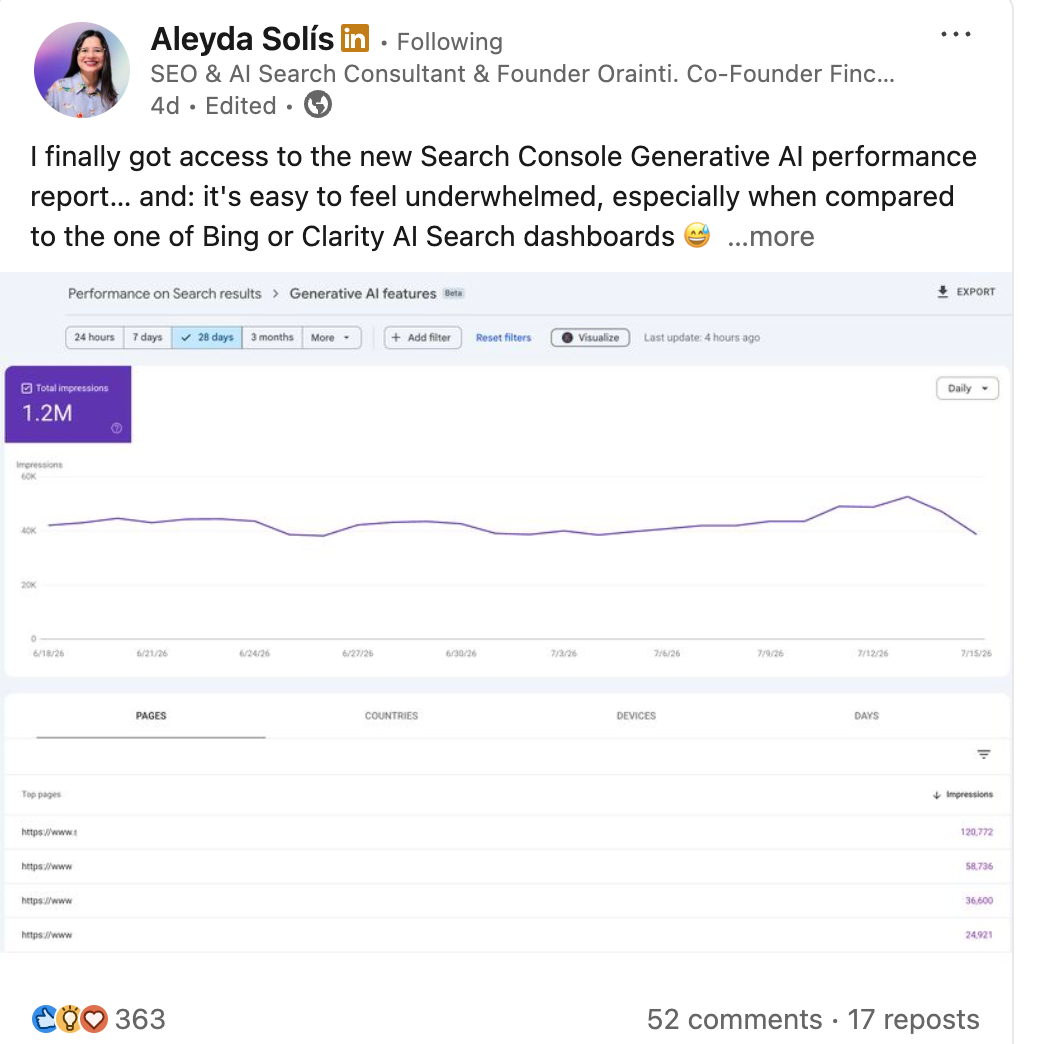
The screenshot showed something the reader had not yet seen. Anyone in the industry can say AI search is changing how buyers find products. Only Aleyda could show her own 1.2M impressions in a dashboard most of her audience had not yet accessed.
The same pattern appeared in another post showing growth chart with 20K cumulative users from Jun 2024 to Jul 2026. A smaller number than the other example 110K followers, but the chart made the trajectory real in a way that a text claim never could.
Posts with a real screenshot, dashboard, or chart generated significantly more substantive comments (specific questions, follow-up requests) than posts making the same claims in text. The image is not decoration. It is the evidence that makes the claim credible.
Finding 8: Grammar Errors in the First Three Lines Correlated With Near-Zero Engagement
One post we reviewed had a visually well-designed carousel, a relevant topic (using AI to write LinkedIn content), and an audience that would plausibly be interested. The first three lines contained three grammar errors and one sentence that did not parse cleanly.
Result: 12 likes, 6 comments.
The same result appeared in a smaller set of other posts with errors in the first two lines.
That’s because LinkedIn readers make a credibility judgment in the first two sentences. A grammar error in that window signals that the rest may not be worth their time. It does not matter that the carousel was solid. The hook is what gets the carousel seen.
What the Data Suggests About LinkedIn in 2026
Taken together, these findings point toward one underlying pattern: LinkedIn rewards posts that create an immediate, specific reason to keep reading, and punishes posts that ask the reader to wait for the point.
The hook is where almost every gap lives. A post scoring 85 on Podawaa's Viral Score and a post scoring 55 are not different in length, format, or topic. They are different in whether the first two lines earn the third.
The Viral Score correctly identified every high and low performer in our review. Before publishing any post, check the score. If it is under 65, the first two lines need attention. That single edit accounts for more of the engagement gap than any other variable we looked at.
For more on what drives reach over time, our LinkedIn follower growth case study and LinkedIn profile views case study show how these patterns compound across months of consistent posting.
Summary
Frequently Asked Questions
What makes a LinkedIn post go viral?
Based on our review, the three most consistent predictors were: a hook that creates tension in the first line without resolving it, an audience named specifically rather than generically, and a first comment with a direct question.
Does follower count determine LinkedIn engagement?
Not all the time. In our review, a creator with a significantly larger audience and stronger brand recognition generated 76x fewer likes on a post that scored lower on Podawaa's Viral Score. The hook was a stronger predictor than follower count in every example we reviewed.
Do carousels or text posts perform better on LinkedIn?
It depends on the goal. Educational carousels tend to earn more saves and profile visits. Contrarian or story text posts tend to earn more comments. In our review, the same creator generated 5.5x more comments from a contrarian text post than from an educational carousel published in the same week. See our LinkedIn impressions case study for a longer-term breakdown.
How do I know if my hook is strong enough before I publish?
Podawaa's Viral Potential score gives you a pre-publish signal based on hook strength and post structure. In our review, every post scoring above 80 outperformed posts scoring under 65, regardless of the creator's audience size. A score below 65 almost always means the first line is explaining the post rather than creating a reason to read it. Our guide on LinkedIn post hook examples breaks down what makes the difference with real examples.
Is posting consistently more important than posting quality content?
Based on what creators discussed on Reddit and what we observed in our review: consistency sets the floor, quality determines the ceiling. Posting once a week every week builds an audience over time. A high-quality post with a strong hook will outperform five average posts in the same week. The creators who grow fastest do both. For more on what that looks like over time, see our LinkedIn follower growth case study.