For two years, the workplace word everyone used was quiet quitting: doing the job, nothing more, and staying out of sight. In 2026, the word has flipped. Loud working is the opposite reflex: making sure everyone can see you working, sometimes more than the work itself deserves.
It is not just a TikTok trend. A survey of 1,000 US workers published in October 2026 by MyPerfectResume puts numbers on it, and they are hard to ignore: 70% of employees think visibility is rewarded more than results. This guide explains what loud working is, why it is spreading, what it really costs, how to tell if you are doing it, and the healthy version of it: making real work visible.
What is loud working?
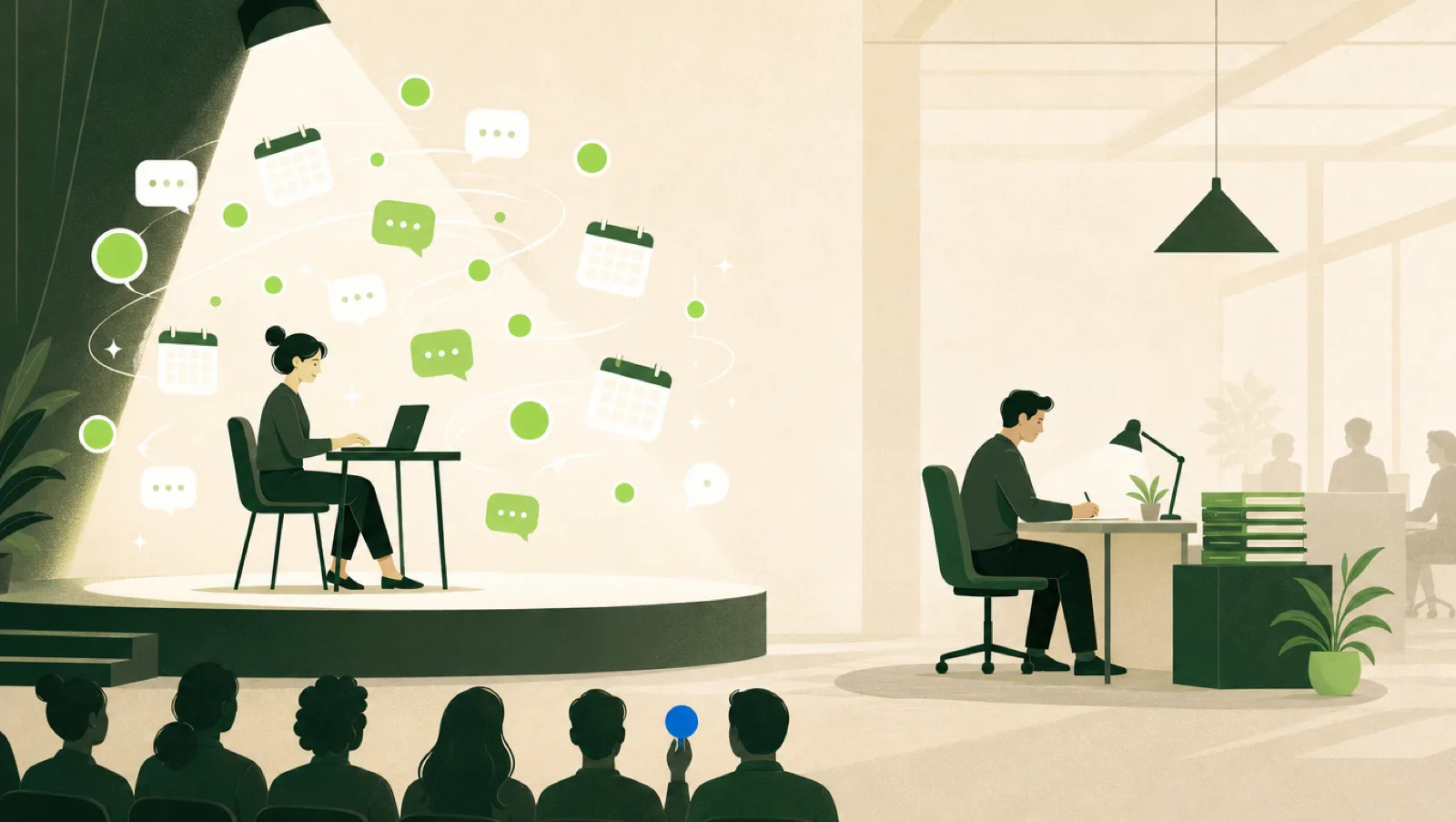
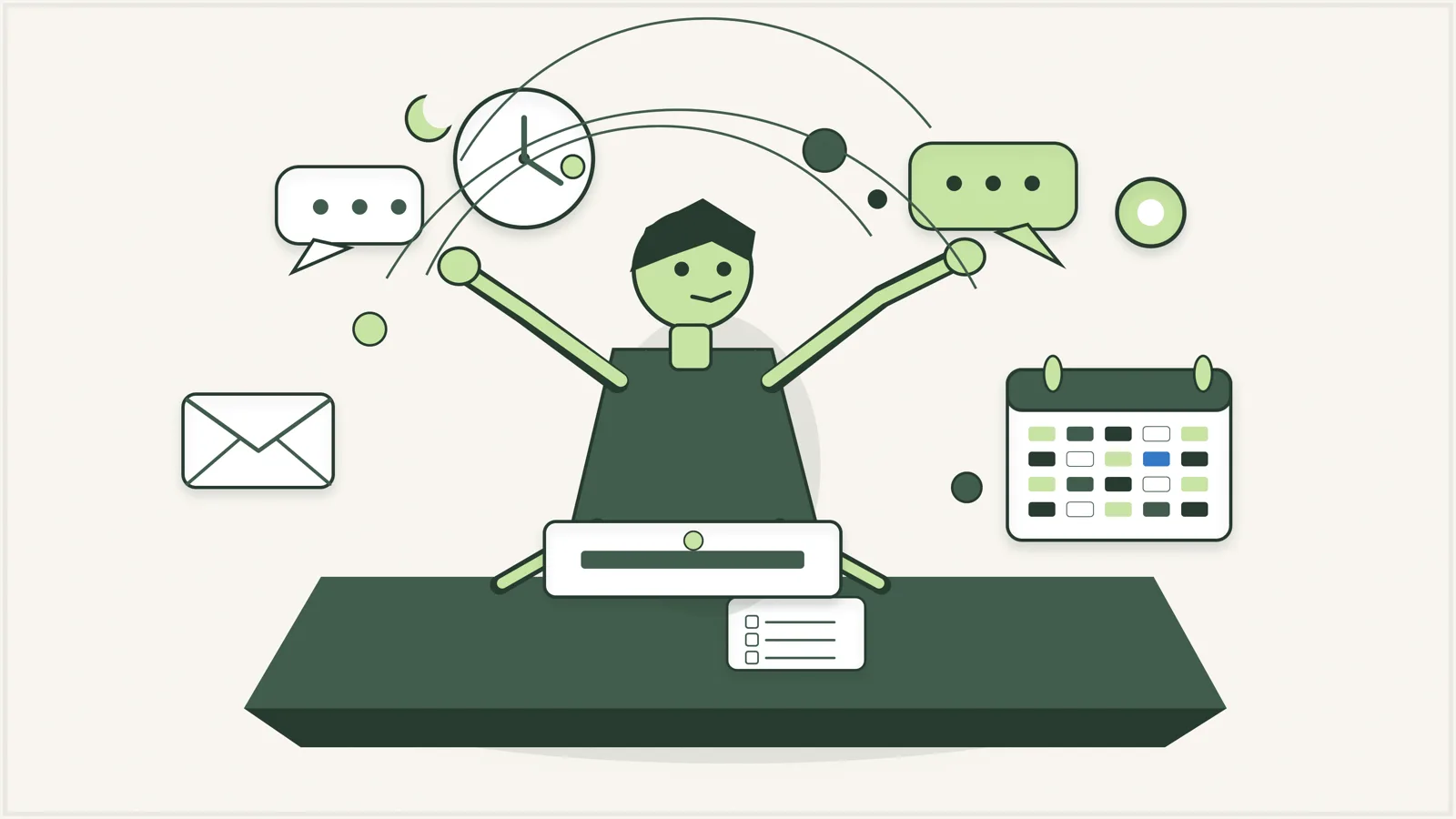
Loud working means performing your workload so that it gets noticed: replying instantly, posting status updates, staying online late, filling the calendar, narrating every task in Slack. The work may be real, but the volume is turned up on purpose.
It sits on a spectrum. At one end, you simply make sure your results are not invisible. At the other end is productivity theater: activity that exists only to be seen. A message sent at 10 pm that could have waited until the morning. A meeting booked to look in demand. A two-hour task stretched over a day so it looks heavier. The difference between the two ends matters, and the rest of this guide is about staying on the right side of it.
Loud working, quiet quitting, productivity theater: what is the difference?
| Quiet quitting | Loud working | Productivity theater | |
|---|---|---|---|
| What it is | Doing only what the job requires, staying out of sight | Making sure your work is seen, volume turned up | Activity that exists only to be seen |
| Typical signs | No extra effort, low visibility | Instant replies, status updates, full calendar | Fake meetings, stretched tasks, 10 pm messages |
| Main risk | Being overlooked or let go first | Burnout, lost focus | Wasted time, eroded trust |
| Healthy version | Clear boundaries | Showing real results | None: drop it |
Loud working by the numbers
The MyPerfectResume survey (1,000 US workers, published October 6, 2026) found that:
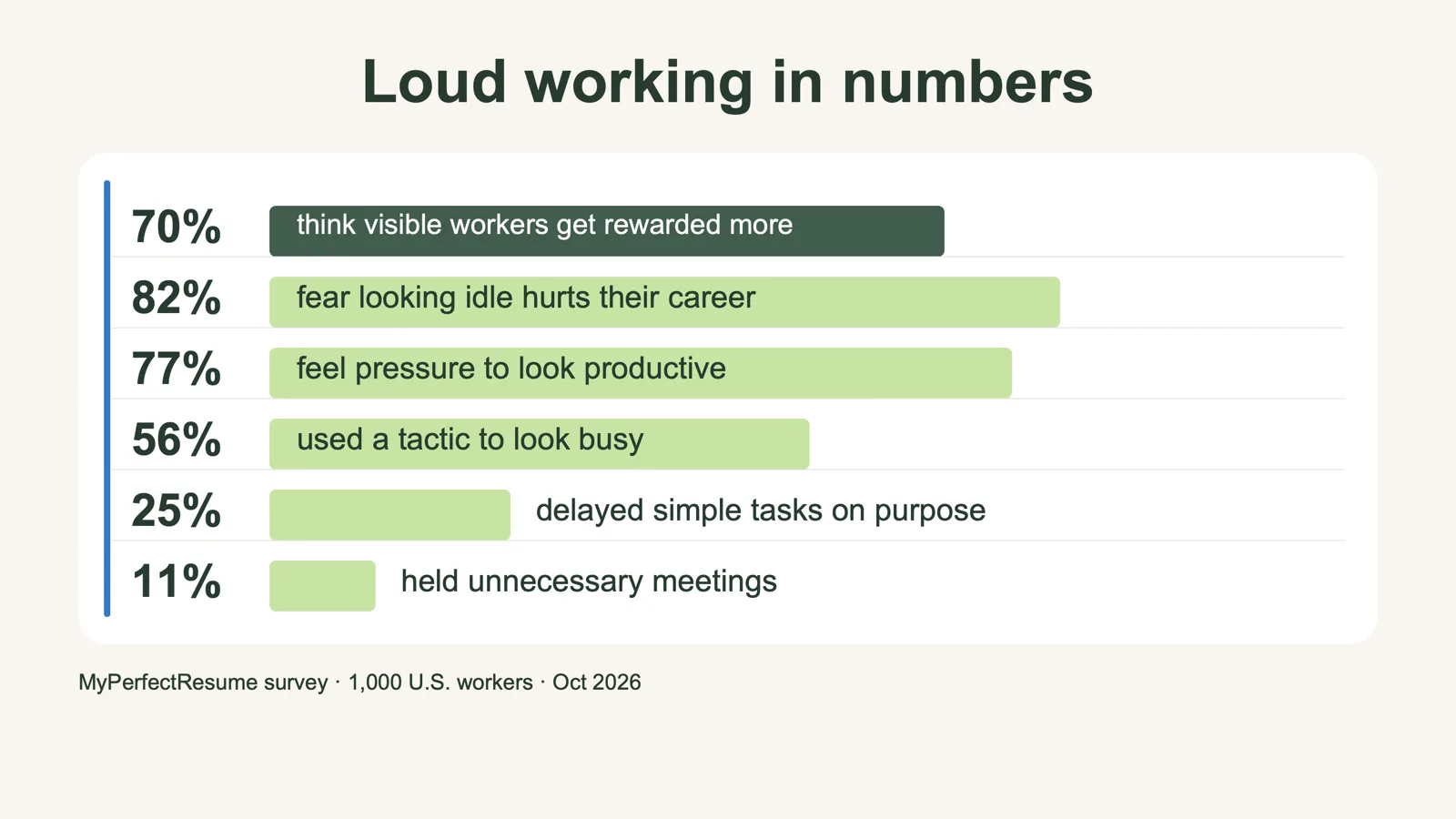
- 70% say visible employees are rewarded more than those who quietly get results.
- 82% have worried, at least occasionally, that looking idle could hurt their job security or career.
- 77% feel pressure to look productive at work.
- 56% have used at least one tactic to appear busy.
- 25% have delayed simple tasks so they look like they take longer.
- 18% have sent emails, messages or status updates mainly to appear active.
- 11% have scheduled unnecessary meetings or blocked their calendar.
- 1 in 5 spends at least a quarter of the workday managing how productive they look.
Two caveats: this is a US sample, and the answers are self-reported. People tend to under-report behaviors they are not proud of, so the real numbers are unlikely to be lower. Either way, the direction is clear: most employees believe that being seen pays, and a large share act on that belief.
Why loud working is spreading
1. Work has become invisible
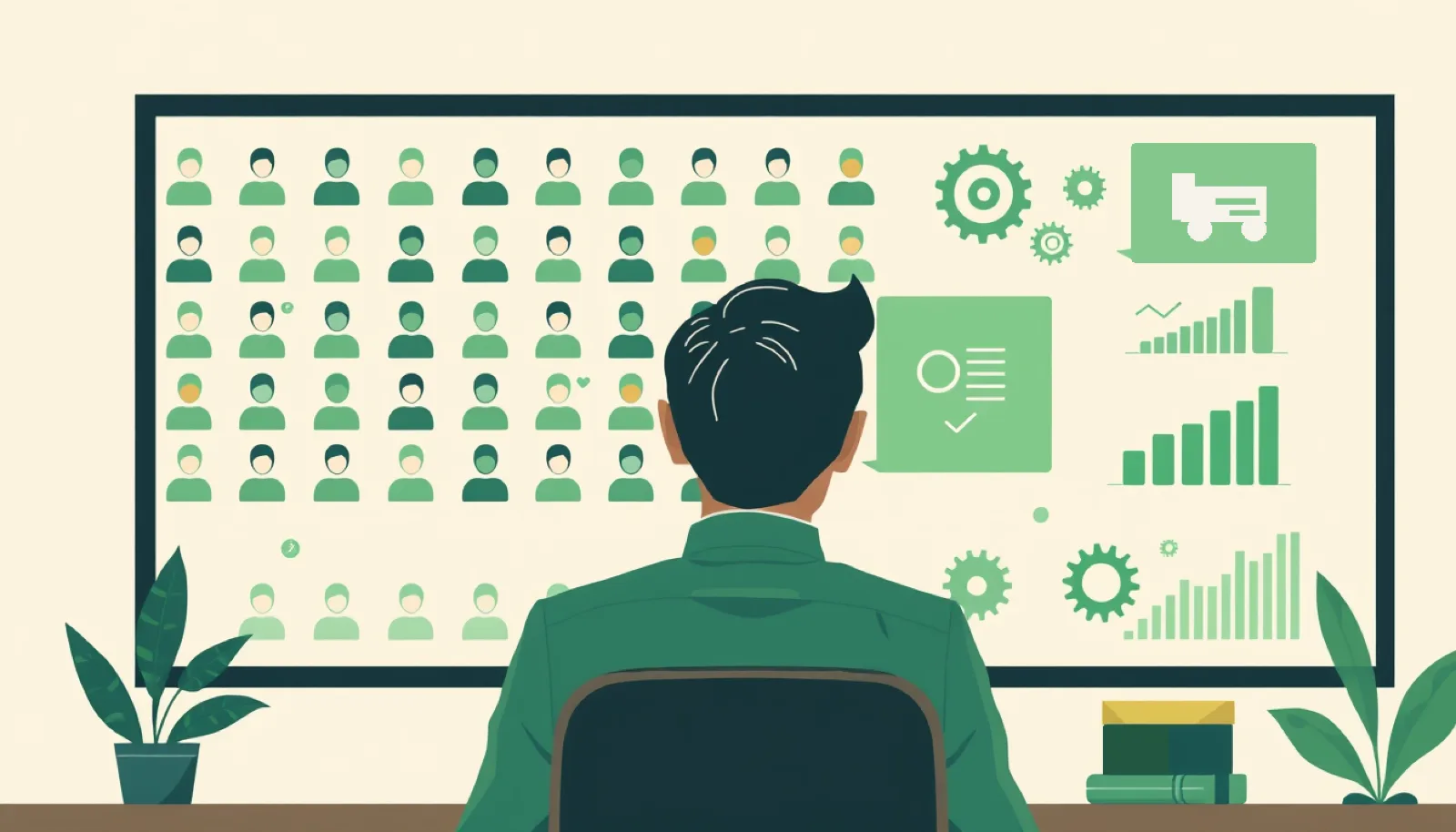
With remote and hybrid work, nobody sees you at your desk anymore. What managers see is a stream of signals: green dots, messages, calendar invites, documents. When the work itself is invisible, the signals become the work, at least in other people's eyes. Someone who spends a morning solving a hard problem in silence looks, from the outside, exactly like someone who did nothing.
2. Results arrive late, activity shows now
A good project can take months to pay off. A message sent at 9:02 pm shows up immediately. When performance reviews and layoffs feel close, people optimize for what can be seen this week, not for what will matter next quarter.
3. Trust is low
The same survey reports that 50% of workers feel pressure to prove their value, 30% say there is too much surveillance, and 28% do not feel trusted by management. Loud working is partly a defense mechanism: if you cannot be trusted, at least you can be seen.
4. AI makes activity cheap to produce
Here is the twist that comes next. Generative AI can write the status update, the recap, the polished Slack message, the meeting summary. Proofs of activity are about to become almost free to produce, and managers will not be able to check them all. When everyone can look busy, looking busy stops meaning anything. What still stands out is a verifiable result with a name attached to it.
What loud working really costs
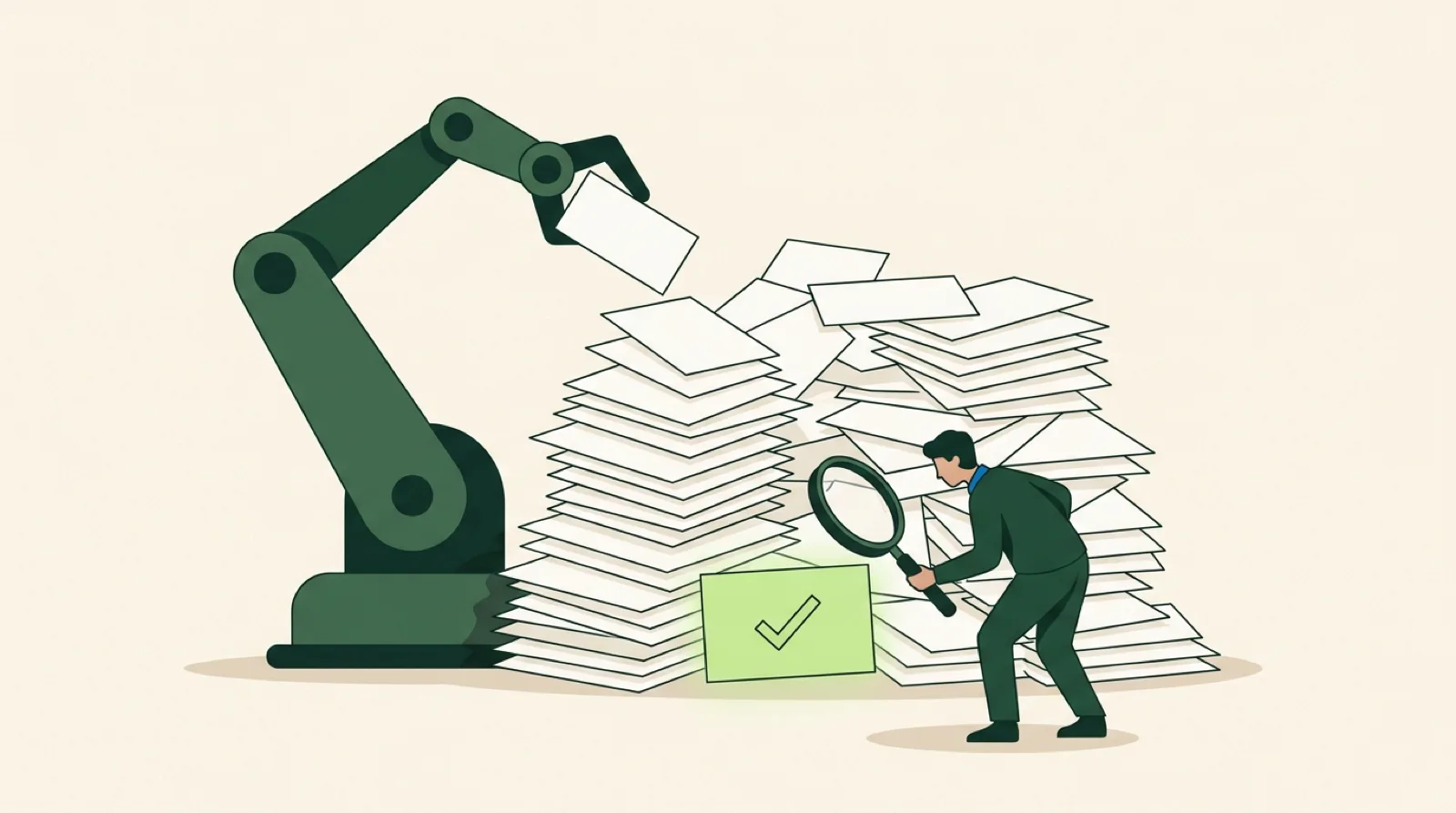
- Time. Spending a quarter of the day on appearances means losing roughly two hours a day of actual work, about ten hours a week.
- Focus. Replying instantly to everything means never staying long enough on one hard problem to solve it.
- Other people's time. Every unnecessary meeting and every "just checking in" message is paid for by the colleagues who have to read or attend it.
- Trust. The person who games the signals best is often not the one who creates the most value. When the team notices, trust in the whole system erodes.
- Your health. In the survey, 35% of workers name the pressure to look productive as their biggest source of stress. Being "always on" for an audience is exhausting.
Are you doing productivity theater? A 6-question self-check
Answer honestly. If you say yes to three or more, part of your week is going to appearances rather than results.
- Do you reply to messages late at night mainly so people see you online?
- Have you stretched a task so that it looks harder or longer than it is?
- Do you accept or book meetings you do not need, to look in demand?
- Do you write status updates that nobody asked for and nobody reads?
- Do you feel anxious when your status turns "away" for an hour?
- At the end of the week, could you name one concrete result, or only a list of things you were busy with?
None of this makes you a bad employee. It means the system around you rewards signals, and you adapted. The fix is not to disappear, it is to redirect that energy toward making real outcomes visible.
The healthy version: show results, not activity
The fear behind loud working is legitimate. Invisible work really does get overlooked. The answer is not to stay quiet, it is to change what you make visible.
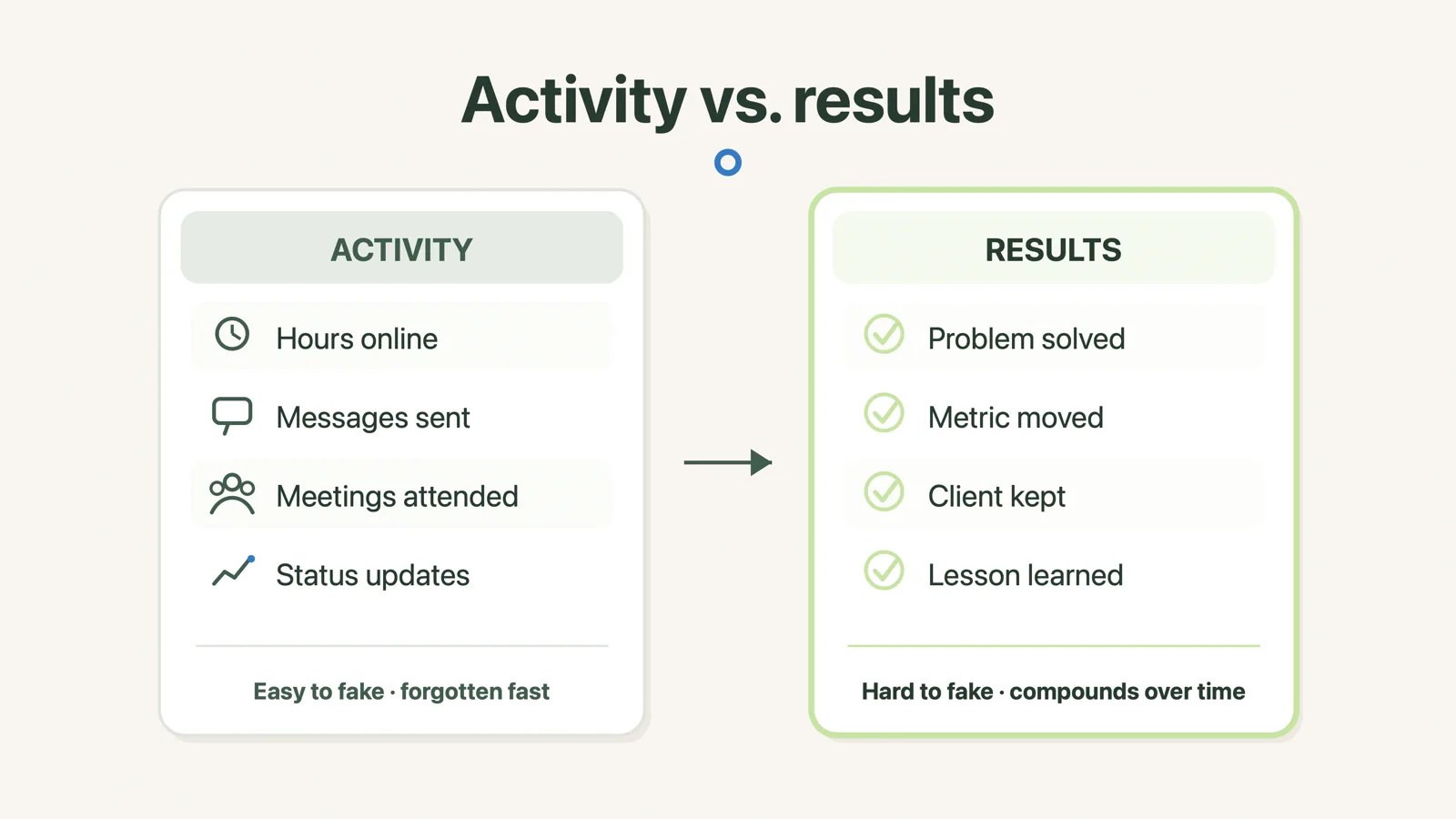
- Activity says "I am busy": hours online, messages sent, meetings attended.
- Results say "this changed": a problem solved, a number moved, a client kept, a lesson learned.
Activity is easy to fake and easy to forget. Results are harder to fake and they compound: they build a reputation that follows you from one manager, one team or one company to the next.
A 15-minute weekly routine to make your work visible
- Friday, 5 minutes: write down one result. Not "worked on the migration" but "the migration is done, page load went from 4 s to 1.5 s".
- 5 minutes: add the context. What was hard, who helped, what you would do differently.
- 5 minutes: choose where it goes. Internally, a short note to your manager. Externally, if it is not confidential, a LinkedIn post. Once a month is already enough to change how people see your work.
That small log also becomes gold at review time: instead of trying to remember what you did in March, you have a list of outcomes with dates.
For managers: how to reduce loud working in your team
If 70% of employees believe visibility beats results, it is because the system often rewards it. A few changes make a real difference:
- Evaluate outcomes, not presence. Agree on what "done well" looks like for each role, and review that, not response times or hours online.
- Make results easy to share. A weekly "wins and lessons" thread or a short demo slot gives quiet, effective people a stage that does not require performing.
- Stop rewarding the 10 pm message. If you praise late replies, you will get more of them.
- Credit people publicly, including outside the company. Resharing or commenting on an employee's LinkedIn post about a project is free and very visible recognition.
Why LinkedIn is where real work becomes visible
Your manager sees your Slack. Recruiters, clients and future employers see your LinkedIn. Inside the company, visibility disappears when you change teams. On LinkedIn, a post about a project you led stays attached to your name. It is the one place where "being loud" about real results builds something durable.
We cover the practical side, with examples, templates and a 4-question test, in our guide on how to do loud working on LinkedIn without faking it.
How Podawaa helps employees make their work visible
Writing a post about a real result is the hard part. The frustrating part is publishing it and watching it reach almost nobody. On LinkedIn, the first hour decides a lot: a post that gets early reactions and comments is shown to more people, while a post that stays silent stalls (more on that in why your first 60 minutes on LinkedIn matter).
That is where Podawaa helps:
- Boost a post when it matters. When you share a project, a win or a lesson, a Boost connects your post to real LinkedIn users, so it does not start in an empty room.
- The right audience, not random likes. Podawaa matches your post with people in your language and industry, using its matching engine Jev (how Jev picks the right people).
- Fully automatic. No need to spend your evening liking other people's posts to earn visibility. Your time goes back to the work itself, which is the whole point.
- Free to start. The Free plan includes 5 boosts a month, no card required. Paid plans start at €29/month.
To be clear about the limits: Podawaa does not guarantee reach, and it cannot make an empty post interesting. It gives a real result the first wave of engagement it needs to be seen. That is the opposite of productivity theater: you amplify what you actually did, instead of manufacturing proof that you were busy.
FAQ
What is the difference between loud working and quiet quitting?
Quiet quitting means doing only what the job requires and staying out of sight. Loud working is the opposite: making your work, or at least your activity, highly visible so that it gets noticed and rewarded.
Is loud working bad?
It depends on what you make loud. Inflating activity (fake meetings, delayed tasks, messages sent just to look online) wastes time and erodes trust. Making real results visible is healthy, and often necessary when work is remote or hybrid.
Is loud working a new phenomenon?
The behavior is old: presenteeism and looking busy at the office have always existed. What is new is the name, which spread in 2026, and the context: remote work made effort invisible, so people now perform it through digital signals instead of physical presence.
Where do the loud working statistics come from?
Mainly from a MyPerfectResume survey of 1,000 US workers published on October 6, 2026. The figures are self-reported and US-only, so treat them as a strong signal rather than a universal measure.
How do I know if I am doing productivity theater?
Ask yourself whether your actions exist mainly to be seen: late-night replies to look online, tasks stretched to look harder, meetings you do not need. If, at the end of the week, you can list what kept you busy but not one concrete result, part of your time is going to appearances.
How will AI change loud working?
AI makes status updates, recaps and polished messages almost free to produce. As proofs of activity multiply, they lose value. Concrete, verifiable results attached to your name become the signal that still stands out.
What can managers do about loud working?
Evaluate outcomes instead of presence or response times, give people an easy way to share results (a weekly wins thread, a demo slot), stop praising late-night messages, and credit good work publicly, for example by commenting on an employee's LinkedIn post about a project.
How can I make my work visible without faking it?
Share outcomes instead of effort: what changed, what was hard, what others can learn, and who helped. LinkedIn is the natural place to do it because your reputation there follows you beyond your current job.
Sources: MyPerfectResume survey via PR Newswire (October 6, 2026); HC Magazine; Straight Arrow News.