LinkedIn hasn't confirmed a system that detects specific pod tools by name. What it has confirmed is something more important: the platform is actively working to reduce visibility for content that shows signs of artificial engagement. LinkedIn's VP of Product Management made that clear recently.
So the real question isn't "can LinkedIn detect my pod tool?" It's "what patterns is LinkedIn reading, and am I triggering them?"
In short: LinkedIn evaluates behavioral patterns, not specific tools. Same accounts engaging every time, tight timing windows, low audience relevance. Those patterns reduce your distribution regardless of which tool, group chat, or pod produced them.
What LinkedIn Actually Confirmed About Pods in 2026
As I mentioned, LinkedIn's VP of Product Management confirmed the platform is working to reduce visibility for content showing signs of coordinated artificial engagement. But what does that mean?
A lot of people read this as "pods are dead, everyone's getting banned." That's not what was said.
What LinkedIn confirmed is that it's updating how it weights engagement signals. Not a ban. Not a blacklist of tools. A smarter algorithm that reads behavior more carefully.
That's an important distinction because it means the solution isn't to stop using pods. It's to stop creating the patterns that work against you. If your engagement looks organic because it comes from real, relevant accounts delivered at a natural pace, this update doesn't hurt you.
What LinkedIn evaluates are patterns of behavior, and those patterns exist whether you're using a tool, a WhatsApp group, or any other coordinated setup.
How LinkedIn Identifies Suspicious Engagement Patterns
LinkedIn reads engagement as a signal of content quality and relevance. It doesn't matter how that engagement was generated, what matters is whether the pattern looks natural.
When that engagement looks repetitive or disconnected from a real audience, it becomes less valuable for distribution. Three specific patterns consistently degrade that signal.
The same accounts engaging every time. When the same 20 or 30 people like every post you publish, LinkedIn maps your content to that narrow group. It stops testing your posts on new audiences because the data doesn't suggest broader interest. Your like count holds steady and your reach shrinks.
Engagement arriving in unnatural time windows. Organic engagement trickles in over hours and days as different people come across a post. Pod engagement tends to cluster within minutes of publishing. That timing pattern looks nothing like natural discovery.
The first hour on LinkedIn matters a lot for distribution, but the shape of that first hour matters just as much as the volume.
Generic or low-quality comments. "Great insight!" from 15 unrelated accounts doesn't look like conversation. It looks coordinated. LinkedIn's system evaluates comment quality as part of the engagement signal, and low-quality comments from irrelevant accounts contribute almost nothing to distribution.
Our guide on how to comment professionally on LinkedIn explains what high-signal comments actually look like if you want to understand the difference.
What LinkedIn Is Actually Measuring Beyond Likes
Most creators track likes and comments. LinkedIn is measuring something more layered than that.
Saves and shares carry significantly more distribution weight than reactions. They signal that someone found the content genuinely useful, not just that they were scrolling past and clicked something.

LinkedIn now weights saves and shares more heavily than reactions because they show genuine interest, not just a passive click. The saves and sends guide breaks down what that means for your content strategy.
Audience relevance is weighted heavily too. Engagement from a software engineer on a post about engineering carries more distribution value than engagement from a recruiter in an unrelated field.
LinkedIn uses the professional identity of who engages to calibrate how relevant your content is to your stated topic. Pod engagement from a generic, untargeted pool doesn't just fail to help distribution. It actively teaches LinkedIn the wrong things about your audience.
If you want to benchmark where you actually stand, what is a good LinkedIn engagement rate gives you real numbers by account size rather than vague guidelines.
What Actually Happens to Your Reach When You Use Pods
Here's what actually happens: your likes stay consistent but your impressions shrink. No warning, no notification, just fewer people seeing each post over time.
Early on, it works. Pod engagement creates early activity, LinkedIn tests the post on a wider audience, impressions go up. It feels like the right move.
But the same group engaging every time teaches LinkedIn that your content is only relevant to that group. So LinkedIn stops showing it to anyone else. Your likes stay the same. Your reach stops growing.
Our LinkedIn impressions case study shows exactly what this looks like. Reactions holding steady, impressions declining. That's the clearest sign the engagement isn't translating into actual reach.
The fix isn't to stop using pods. It's to make sure the engagement you're getting looks like it's coming from the right people, at a natural pace. That's exactly what Podawaa is built to do.
How Podawaa Approaches This Differently
Here's something most people don't realize about how tools like Podawaa work: it doesn't connect to your LinkedIn account at all. Meaning no login. No browser extension. No account access.
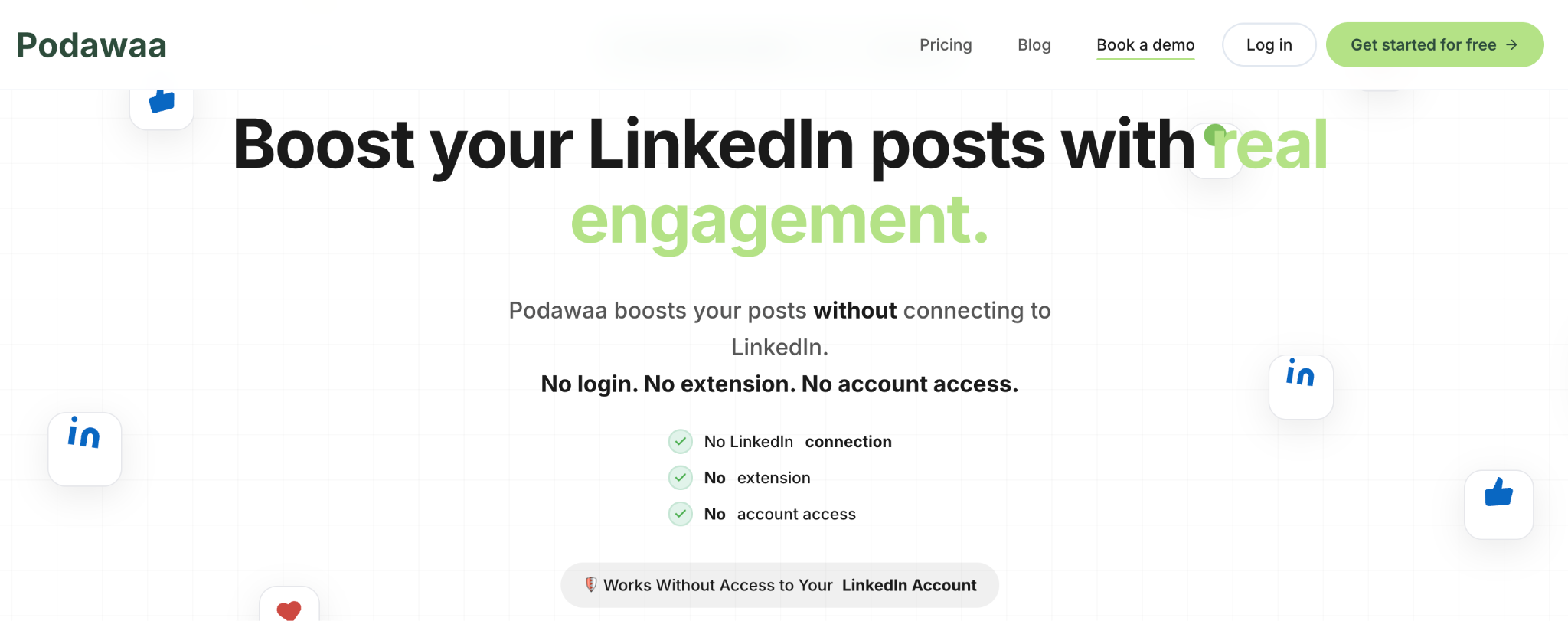
This matters for the detection question because LinkedIn can't identify Podawaa by detecting a connected tool or extension.
What it can evaluate are the behavioral patterns that any engagement creates, which is exactly why Podawaa's configuration is built around controlling those patterns.
The engagement itself comes from real LinkedIn users, not bots. Every interaction comes from a verified LinkedIn profile with real connections.
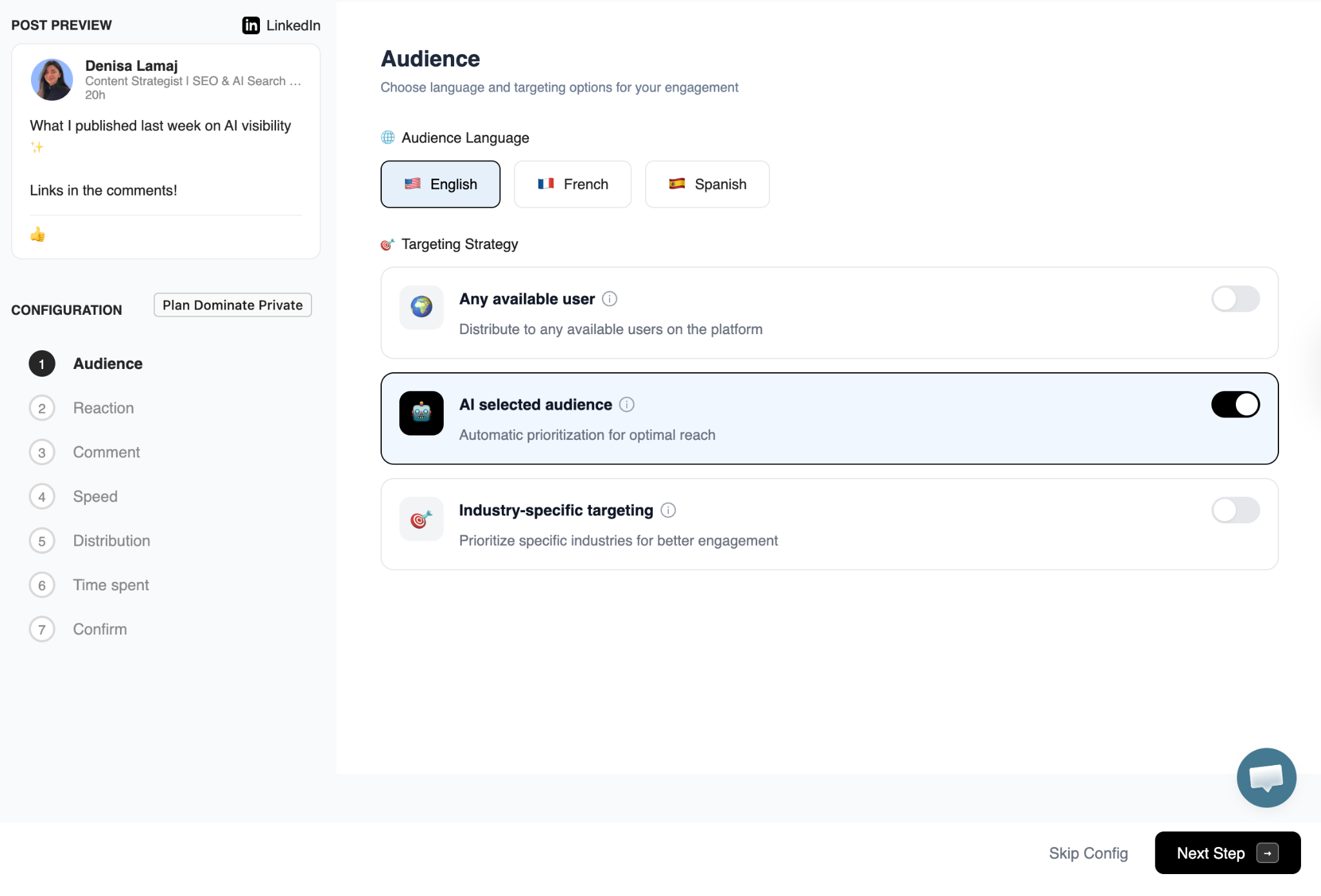
AI selects users from your industry who are relevant to your content, so the engagement LinkedIn reads is coming from professionally appropriate accounts rather than a generic pool.
Delivery mimics how organic engagement actually behaves. Natural Growth mode spreads interactions over 24 to 48 hours. The algorithm Podawaa uses is designed specifically to match human engagement patterns rather than produce the tight timing clusters that trigger distribution problems.
Volume tiers are labeled Safe, Risky, or High Risky before you confirm anything. You're not finding out the cost after the fact.
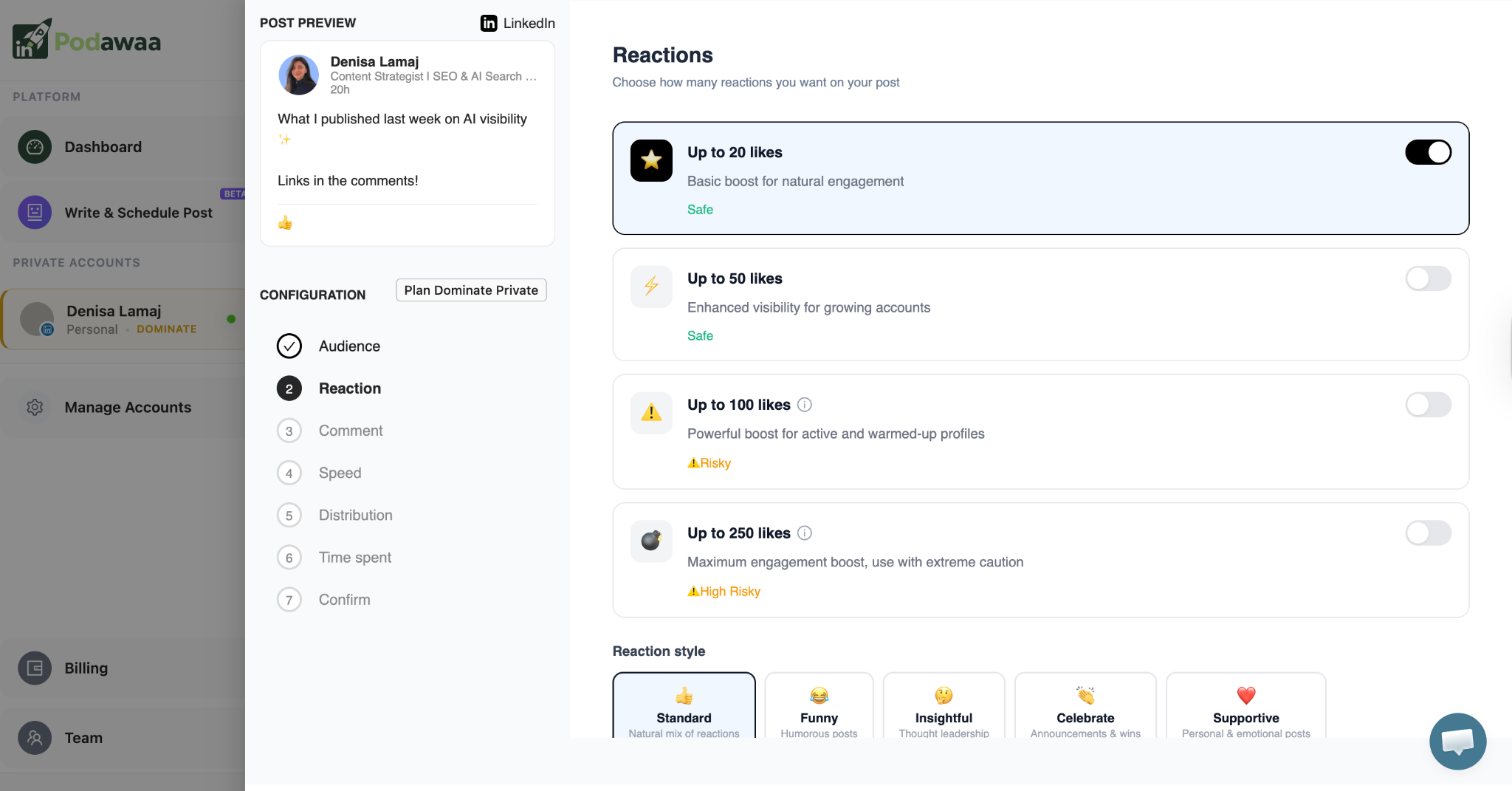
This is the difference between blunt pod engagement and configured engagement. One creates patterns that reduce distribution. The other is built to create patterns that support it.
If you're comparing tools more broadly, check our LinkedIn engagement tools comparison guide.
Try Podawaa free for 7 days and see the configuration yourself.
Key Takeaways
- LinkedIn has no confirmed system that detects specific pod tools by name
- LinkedIn's VP of Product confirmed in 2026 the platform is reducing distribution for content showing signs of coordinated artificial engagement
- The algorithm reads behavioral patterns: same accounts every time, tight timing windows, low audience relevance
- Saves, shares, and comments are all signals LinkedIn reads beyond just reactions
- Podawaa doesn't connect to your LinkedIn account, so there's no tool-level detection surface
- Engagement from real, industry-relevant accounts sends fundamentally different signals than a generic pool
- Configured engagement matters more as LinkedIn's scrutiny of these patterns increases
Frequently Asked Questions
Will LinkedIn ban my account for using engagement pods?
No, widely documented cases of accounts being banned specifically for pod usage exist. The more common outcome is algorithmic. Your reach quietly shrinks over time, without any warning or notification.
Does LinkedIn know which pod tool I'm using?
LinkedIn hasn't confirmed it identifies specific tools. What it reads are behavioral patterns: who engages, when, how often, and whether those accounts are relevant. Tools that don't connect directly to LinkedIn don't create a detectable tool footprint. The pattern the tool creates is what matters.
What engagement signals matter most right now?
Saves and shares first, then substantive comments from relevant professionals, then reactions. Audience relevance runs underneath all of them: engagement from people who actually match your content topic is weighted more heavily than engagement from a generic pool regardless of engagement type.
What's the difference between a pod and LinkedIn's paid promotion?
LinkedIn's paid tools boost content through the official ad system with declared targeting parameters. Pods use coordinated user behavior outside that system. LinkedIn treats these differently algorithmically. Paid signals are distribution inputs. Pod signals are evaluated as organic engagement, which means quality and relevance matter the same way they do for any organic interaction.